
The Critical Role of Electrolytes: Why Water Is Never Enough
Electrolytes are involved in many essential processes throughout the body, and their role goes far beyond simple hydration. While most people associate electrolytes with sweating or exercise, they are actually fundamental to how your body functions at a cellular level.
They play a key role in conducting nerve impulses, supporting muscle contractions, regulating fluid balance, and maintaining proper pH levels. Without an adequate supply of electrolytes, these systems cannot operate efficiently. That is why simply drinking more water is not always enough. Your body needs the right balance of minerals to properly use that water and maintain stability.
This article breaks down what electrolytes are, how they function, what happens when they are out of balance, and how to support them through proper nutrition.
What Are Electrolytes?
The term electrolyte refers to minerals that carry a positive or negative electrical charge when dissolved in fluid. In the body, these minerals are found in your blood, sweat, and urine, where they play a critical role in metabolic processes and cellular communication.
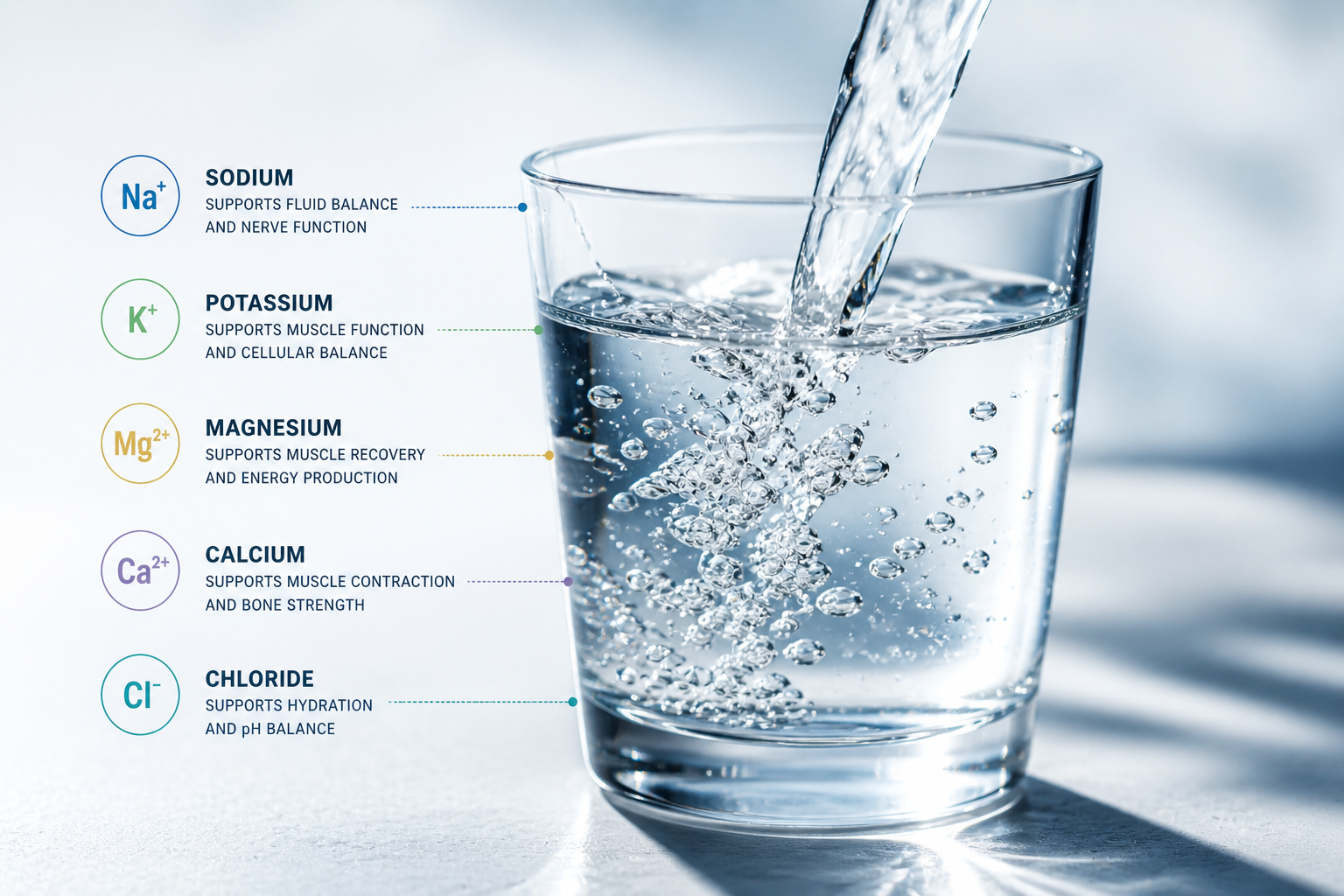
Key electrolytes include sodium, potassium, chloride, calcium, magnesium, phosphate, and bicarbonate. Each of these minerals contributes to maintaining proper nerve function, muscle activity, hydration status, and internal balance. When these electrolytes are in the correct range, the body operates efficiently. When they are not, performance and function begin to decline.
Electrolytes and Body Function
Electrolytes are essential for keeping your nervous system, muscular system, and internal environment working properly. They are not just supporting players. They are actively involved in how your body communicates and responds.
Nervous System Function
Your brain communicates with the rest of your body through electrical signals known as nerve impulses. These signals depend on changes in electrical charge across nerve cell membranes, which are driven by electrolytes, particularly sodium. As sodium moves across the membrane, it creates a chain reaction that allows signals to travel along the nerve pathway. This process is what allows your body to react, move, and function in real time.
Muscle Function
Muscle contraction is also dependent on electrolytes. Calcium plays a direct role in allowing muscle fibers to contract, while magnesium helps those muscles relax after contraction. Without the proper balance of these minerals, muscles cannot function efficiently, which can lead to tightness, cramping, or reduced performance.
Proper Hydration
Hydration is not just about how much water you drink. It is about how well your body manages that fluid. Electrolytes, especially sodium, help regulate fluid balance through a process called osmosis. This allows water to move in and out of cells appropriately, preventing both dehydration and overhydration at the cellular level.
Internal pH Levels
Your body must maintain a very specific internal pH range to function properly. Electrolytes act as buffers that help regulate this balance and prevent large swings in acidity or alkalinity. Even small disruptions in pH can negatively impact how your body operates, which is why maintaining electrolyte balance is critical.
Electrolyte Imbalances and Your Health
Electrolyte levels can become too high or too low under certain conditions, leading to imbalances that affect overall health and performance. These imbalances are often the result of fluid loss from sweating, illness, or other stressors on the body.
When electrolyte balance is disrupted, the effects can range from mild to severe. In less noticeable cases, you may experience fatigue, headaches, muscle tightness, or reduced recovery. In more significant cases, symptoms can include irregular heartbeat, confusion, muscle weakness, or neurological disturbances.
These symptoms are often overlooked or attributed to other causes, but they frequently point back to instability within the body’s internal environment.
Do You Need More Electrolytes If You Sweat a Lot?
When you sweat, you lose both water and electrolytes, particularly sodium and chloride. The amount lost can vary depending on the individual, the intensity of activity, and environmental conditions such as heat.
While it is true that prolonged or intense exercise can increase electrolyte needs, most people already consume adequate amounts of sodium through their diet. For the general population, replacing fluids with water and maintaining a balanced diet is usually sufficient.
However, individuals who train for extended periods, perform in high heat, or experience significant fluid loss may benefit from additional electrolyte support. The key is understanding your specific needs rather than assuming more is always better.
Dietary Sources of Electrolytes
The most effective way to maintain proper electrolyte balance is through whole food nutrition. A well-structured diet provides the minerals necessary to support hydration, performance, and overall health.
Sodium is commonly found in natural salts and certain whole foods. Potassium is abundant in fruits and vegetables such as bananas, avocados, and sweet potatoes. Magnesium can be obtained from nuts, seeds, and leafy greens, while calcium is found in dairy products and fortified alternatives.
When your nutrition is built around quality, whole foods, your body is far more capable of maintaining electrolyte balance without the need for excessive supplementation.
Should You Supplement Your Diet with Electrolytes?
Supplementation can be useful in certain situations, but it is not necessary for everyone. Many people turn to electrolyte drinks or powders without understanding whether they actually need them.
In most cases, a balanced diet provides sufficient electrolytes to meet daily demands. The body is also highly efficient at regulating these levels under normal conditions.
However, during periods of illness, excessive sweating, or significant fluid loss, targeted supplementation may help restore balance more effectively. Even then, it should be approached with intention, not guesswork, as excessive intake can create new imbalances.
Bottom Line
Electrolytes are essential minerals that allow your body to function properly. They regulate hydration, support muscle and nerve activity, and maintain internal balance at the cellular level.
Water alone is not enough. Without the proper balance of electrolytes, your body cannot effectively use the fluid you consume.
When electrolyte levels are supported through proper nutrition and, when necessary, targeted supplementation, your body is better equipped to maintain energy, performance, and overall stability.
Understanding this changes how you approach hydration and gives you a more complete picture of how your body actually works.
About the Author
Coach Tony is a Board-Certified Nutrition Specialist and Master Personal Trainer with over 40 years of experience in the health and fitness industry. He specializes in metabolic health, fat loss, and body composition, helping clients restore their metabolism through structured nutrition and resistance training.