
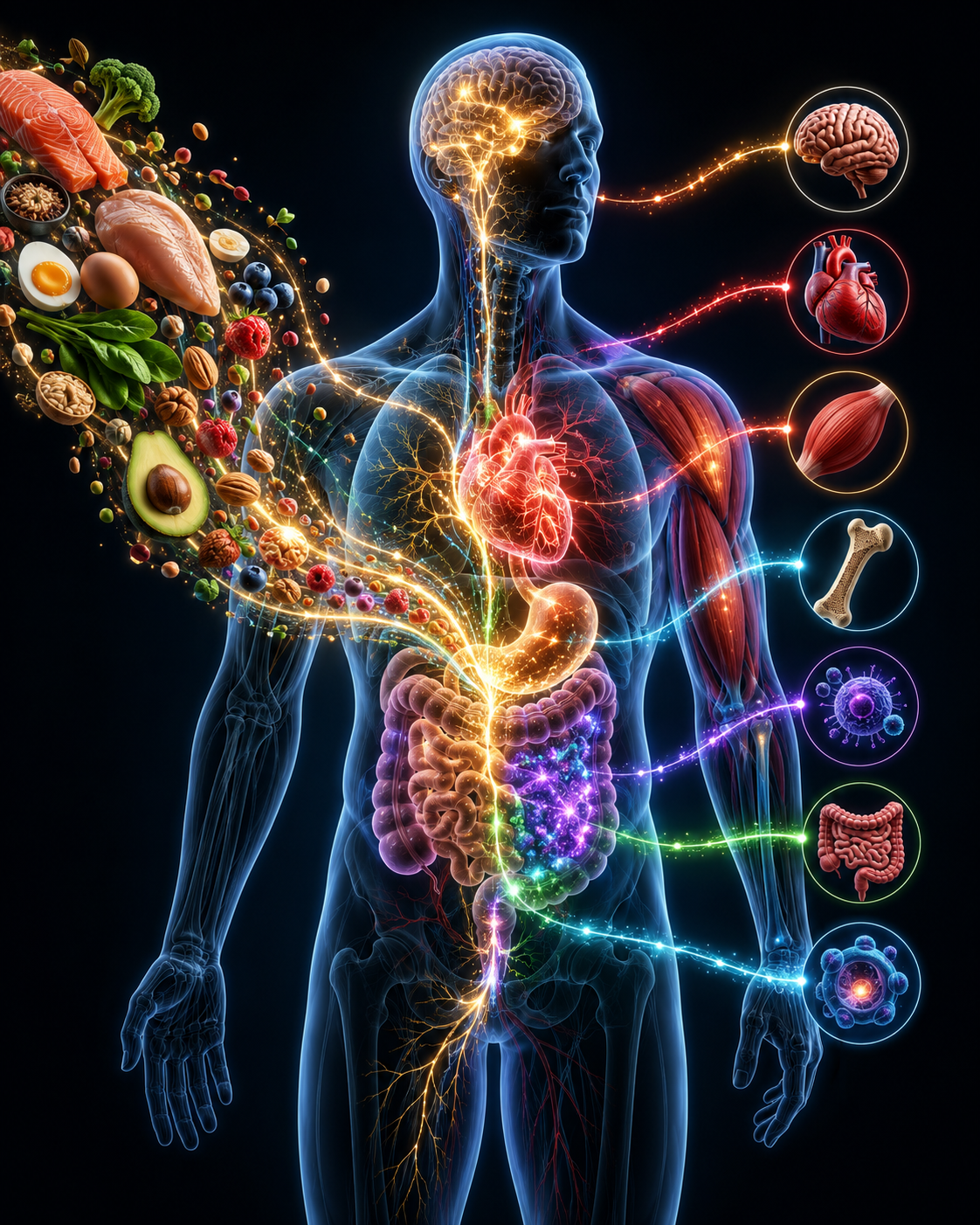
Nutrition Isn’t About Counting Calories
It’s About Understanding the Instructions You’re Sending Your Body
If you’ve ever tried to lose weight, there’s a good chance you’ve counted calories at some point. Maybe you downloaded a calorie-tracking app, carried around a food journal, or carefully studied nutrition labels every time you went grocery shopping. For decades, we’ve been taught that successful weight management is simply a matter of consuming fewer calories than we burn. While energy balance certainly plays an important role, that way of thinking has also led many people to believe that calories alone determine whether we become healthier, leaner, or heavier.
The reality is far more complex. A calorie is simply a measurement of energy. It tells us how much potential energy a food contains, but it tells us almost nothing about how that food will influence our hormones, metabolism, immune system, digestive tract, brain, muscles, or fat cells after we eat it. Nor does it tell us whether that meal will leave us energized and satisfied or hungry again an hour later.
Over the past several decades, advances in nutrition science, physiology, and molecular biology have fundamentally changed our understanding of food. We now know that food does far more than provide energy. Every bite contains proteins, carbohydrates, fats, vitamins, minerals, fiber, antioxidants, phytochemicals, and thousands of naturally occurring compounds that immediately begin influencing how the body functions. Before food ever becomes fuel, it first becomes information.
Think about that for a moment because it’s one of the most important concepts you can learn about nutrition. Every meal you eat is sending instructions that help determine how your body responds. Those instructions influence blood sugar, hormone activity, inflammation, muscle repair, appetite, and countless other biological processes. Long before a single calorie is burned, your body is already responding to the information contained within the food you’ve chosen to eat.
Once you begin viewing nutrition through this lens, many of the frustrations surrounding dieting begin to make sense. If nutrition were nothing more than a mathematical equation, losing weight would simply require eating fewer calories every day. Yet millions of people count calories while continuing to struggle with constant hunger, cravings, low energy, and disappointing long-term results. Calories matter, but they’re only one piece of a much larger biological puzzle. To truly understand nutrition, we have to look beyond the calories in our food and begin understanding the instructions that food delivers every time we eat.
Calories Measure Energy – Biology Determines the Outcome
One of the biggest misconceptions in nutrition is believing that calories tell us everything we need to know about a food. They don’t. Calories simply measure the amount of potential energy contained within that food, much like measuring the amount of gasoline in a vehicle’s fuel tank. While that measurement tells you how much fuel is available, it tells you nothing about the quality of the fuel, the condition of the engine, or how efficiently the vehicle will perform. The human body works much the same way. Calories measure energy, but biology determines the outcome.
If two meals each contain 700 calories, it’s easy to assume they’ll produce the same result inside the body. But the body doesn’t respond to calories in isolation. It responds to the nutrients packaged with those calories. Those nutrients influence hormone release, digestion, blood sugar regulation, muscle repair, appetite, and hundreds of other physiological processes. That’s why two meals containing identical calories can produce dramatically different effects over the next several hours.
Food Is One of the Most Powerful Forms of Biological Information
Every second of every day, your body monitors what’s happening inside you. It constantly tracks blood sugar, hormone levels, nutrient availability, hydration, inflammation, oxygen levels, and hundreds of other variables to keep everything functioning properly. The moment you begin eating, that monitoring system shifts into high gear. As nutrients are digested and absorbed into the bloodstream, they immediately begin influencing nearly every major system in your body. Before those nutrients are ever burned for energy, they are already affecting how your body responds.
Protein provides an excellent example of this communication. Most people associate protein with building muscle, but its responsibilities extend far beyond the gym. The amino acids it supplies become the building blocks for enzymes, hormones, antibodies, neurotransmitters, connective tissue, and virtually every organ in the body. At the same time, carbohydrates influence how quickly glucose enters the bloodstream and how much insulin is required to manage it. Whole-food carbohydrates, rich in fiber, produce a much different response than highly processed carbohydrates that are rapidly absorbed and often leave us hungry again only a short time later.
Healthy fats send equally important signals. They help build every cell membrane in the body, support hormone production, aid in the absorption of fat-soluble vitamins, and contribute to normal brain function and satiety. Vitamins, minerals, and fiber provide little or no energy themselves, yet they participate in thousands of biochemical reactions that keep the body functioning properly. Fiber also nourishes the trillions of beneficial bacteria living in our digestive tract, supporting digestion, immune function, and healthy blood sugar regulation. These nutrients aren’t valuable because of the calories they contain. They’re valuable because many of the body’s most important systems simply cannot function efficiently without them.
When you begin looking at food through this perspective, nutrition becomes far more than simply counting calories. Every meal becomes an opportunity to provide your body with the raw materials it needs to repair tissue, regulate hormones, support a healthy metabolism, maintain a healthy gut microbiome, and protect itself from disease. Instead of asking whether a meal fits within a calorie budget, you begin asking whether it provides the nutrients your body needs to function at its highest level. That simple shift in thinking changes nutrition from an exercise in restriction to one of nourishment.
Your Body Is Constantly Reading Your Meals
Your body doesn’t simply digest food and hope for the best. Every time you eat, specialized receptors located throughout your digestive system, bloodstream, liver, pancreas, muscles, and brain begin evaluating the nutrients that have just arrived. Those receptors aren’t counting calories or comparing your meal to a number on a nutrition label. They’re asking a much more important question: What resources are available, and what should we do with them?
Imagine your body as the manager of an incredibly complex manufacturing facility that never closes. Every second of every day, billions of cells require energy, repair, maintenance, and replacement. Hormones must be produced, muscles repaired, enzymes manufactured, immune cells activated, and damaged tissues rebuilt. Every meal provides new information that helps your body prioritize those jobs. The better the quality of that information, the better equipped your body is to perform the countless tasks required to keep you healthy.
Every major system responds to the nutrients you consume. Hormones help regulate blood sugar, appetite, and energy use. Muscles begin repairing damaged tissue when adequate amino acids are available. Your digestive system nourishes beneficial gut bacteria that contribute to digestion and immune health. Even your immune system depends on essential nutrients to repair tissue and defend against illness. Although each system performs a different function, they’re all responding to the same thing: the nutritional information contained within your meal.
When you step back and look at the body as a whole, an incredible picture begins to emerge. Your body isn’t simply processing calories. It’s constantly gathering information, interpreting it, and making decisions that influence your metabolism, appetite, recovery, energy levels, and long-term health. Every meal becomes another opportunity to provide better information, allowing your biology to work with you rather than against you.
Why Two Meals with the Same Calories Can Produce Completely Different Results
Understanding the science is important, but seeing it in action makes the concept much easier to appreciate. Imagine two lunches that each contain approximately 700 calories. One consists of grilled chicken breast, roasted vegetables, brown rice, fresh berries, and a handful of almonds. The other consists of a cheeseburger, French fries, a large soft drink, and a small dessert. From a calorie standpoint, they’re nearly identical. From a biological standpoint, they couldn’t be more different.
As digestion begins, the balanced meal provides high-quality protein, fiber, healthy fats, vitamins, minerals, and slowly digested carbohydrates. Blood sugar rises gradually, allowing insulin to respond in a controlled manner while delivering glucose into cells for energy. Protein supplies the amino acids needed for tissue repair and muscle maintenance, fiber slows digestion and promotes satiety, and the healthy fats contribute to hormone production while helping sustain energy between meals. At the same time, vitamins, minerals, and antioxidants begin supporting thousands of metabolic reactions taking place throughout the body.
The highly processed meal produces a very different response. Refined carbohydrates digest quickly, causing blood sugar to rise much more rapidly and requiring a much larger insulin response. While insulin is essential for life, repeated cycles of rapid blood sugar spikes followed by sharp declines often leave people feeling tired, hungry, and searching for another quick source of energy only a few hours later. Both meals delivered similar calories, but they created two very different hormonal and metabolic environments.
Several hours later, the difference becomes even more obvious. The individual who ate the balanced meal is often still satisfied because protein, fiber, and healthy fats continue slowing digestion while helping regulate appetite. Energy levels remain steady, concentration is maintained, and the desire to snack is usually minimal. The person who ate the highly processed meal, however, may already be craving something sweet or reaching for another snack as blood sugar begins to decline. This isn’t simply a matter of willpower. In many cases, it’s normal physiology responding to the nutritional signals created by the previous meal.
This helps explain why successful nutrition is about much more than simply reducing calories. The foods we choose influence blood sugar, appetite hormones, digestion, nutrient availability, energy levels, and ultimately the choices we’re likely to make later in the day. When meals consistently provide the body with high-quality protein, fiber, healthy fats, and minimally processed carbohydrates, healthy eating often becomes easier because our biology begins working with us rather than constantly fighting against us.
That principle is one of the reasons I encourage my clients to build every meal around a quality source of protein before anything else. Once protein is in place, it’s much easier to build a balanced meal by adding vegetables, fruit, healthy fats, and minimally processed carbohydrates. Rather than simply filling your plate with calories, you’re providing your body with the nutrients it needs to repair, regulate, recover, and perform at its best. Over time, those choices create an internal environment that naturally supports better health, improved body composition, and more consistent energy.
Start Asking Better Questions
One of the reasons I gradually moved away from making calories the primary focus of nutrition coaching is because I watched too many people become trapped by the numbers. Meals became mathematical equations instead of opportunities to nourish the body, and eating out with family or friends often created unnecessary stress rather than enjoyment. Instead of learning how to build healthy meals, many people became consumed with tracking numbers that were estimates to begin with. In the process, they lost sight of what truly matters: giving the body the nutrients it needs to function properly.
That’s why I encourage my clients to ask different questions. Instead of asking, “How many calories are in this meal?” ask, “What is this meal providing my body?” Is it supplying enough protein to support muscle maintenance and repair? Does it contain fiber to help regulate blood sugar and appetite? Are there healthy fats to support hormones and brain function? Is it providing the vitamins, minerals, and antioxidants needed to support normal cellular function? Those questions naturally lead to better food choices without becoming consumed by numbers.
Ironically, when people consistently build balanced, nutrient-dense meals, many discover they no longer feel the need to obsess over calories. Their appetite becomes easier to manage, cravings begin to decrease, energy levels become more stable, and healthy eating starts feeling less like a constant battle. They’re no longer trying to outsmart their biology. They’re finally working with it.
At the end of the day, nutrition isn’t about finding another diet or chasing another number on an app. It’s about understanding how your body works and consistently providing it with the nutrients it needs to thrive. Every meal is another opportunity to improve your health, support your metabolism, preserve muscle, and move one step closer to becoming the healthiest version of yourself.
The Bottom Line
For decades, we’ve been taught to view nutrition primarily through the lens of calories. While calories are an important part of the equation, they tell only a small part of the story. Every meal you eat delivers far more than energy. It provides proteins, carbohydrates, fats, vitamins, minerals, fiber, and thousands of naturally occurring compounds that immediately begin influencing your hormones, metabolism, muscles, digestive system, immune function, and countless other biological processes. Your body is constantly interpreting that information and adjusting its physiology in response.
When you begin looking at food through this perspective, everything changes. You stop seeing meals as collections of calories and begin recognizing them as opportunities to nourish your body, support your metabolism, preserve muscle, stabilize blood sugar, and improve your long-term health. Instead of asking, “How many calories am I eating?” you begin asking a far more meaningful question:
“What instructions is this meal sending to my body?”
That simple shift in thinking has the power to transform the way you eat for the rest of your life because every meal becomes another opportunity to move your health in the right direction.
About the Author
Coach Tony is a Board-Certified Nutrition Specialist and Master Personal Trainer with over 40 years of experience in the health and fitness industry. He specializes in metabolic health, fat loss, and body composition, helping clients restore their metabolism through structured nutrition and resistance training.