
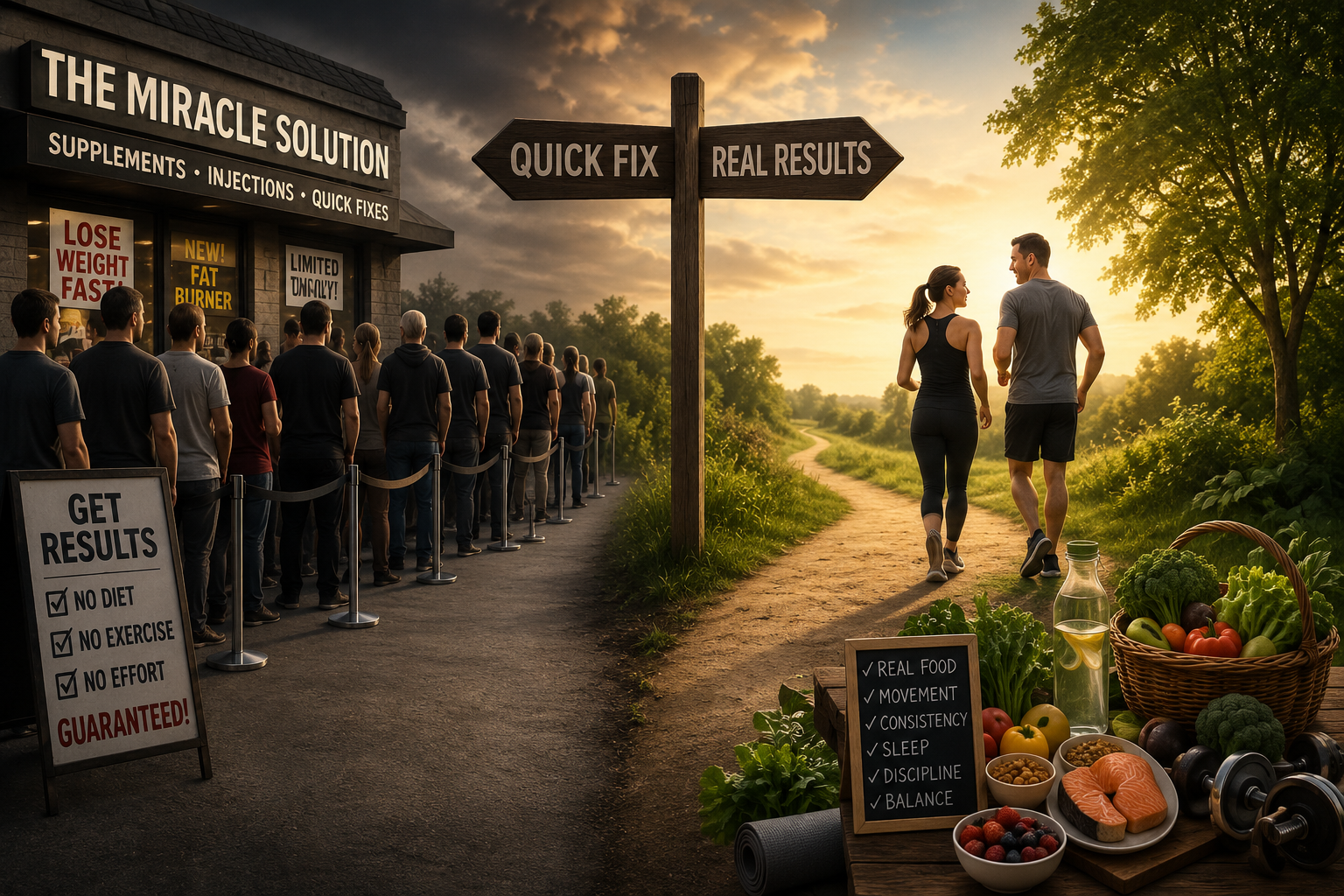
The Greatest Health Technology You’ll Ever Own Is Already Inside You
Supporting Your Body’s Natural Physiology May Be the Most Important Health Decision You Ever Make
Throughout my coaching career, one conversation has repeated itself hundreds of times.
Someone sits down across from me and says, “Coach, I think there’s something wrong with my body.”
Some are frustrated because they can’t lose weight no matter how many diets they’ve tried. Others are convinced their metabolism has slowed to a crawl, their hormones have permanently changed, or that age has finally caught up with them. Many have reached the point where they genuinely believe their body has stopped responding the way it should.
I understand why people feel that way. When you’ve struggled with your weight for years, watched your blood sugar climb, lost strength and muscle, or found yourself relying on more medications than you ever expected, it’s easy to conclude that your body is working against you. After enough disappointment, many people stop trusting their own physiology and begin searching for another supplement, another medication, another peptide, or another product promising to fix what they believe has gone wrong.
After more than 45 years of studying nutrition, metabolism, exercise physiology, and coaching thousands of individuals, I’ve come to a very different conclusion. In many cases, the body isn’t broken at all. It’s responding exactly the way human physiology was designed to respond.
That distinction completely changes the way we should think about health. Instead of asking, “What’s wrong with my body?” we should begin asking a much more productive question: “Why is my body responding this way?”
The answer often has less to do with a defective metabolism than most people realize. More often, the body is adapting to the conditions it has experienced over months, years, and sometimes decades. Nutrition, physical activity, sleep, stress, muscle mass, and countless other factors all influence how the body functions over time. Understanding that principle shifts our focus away from trying to outsmart the body and toward learning how to better support it.
The Human Body Is Designed to Adapt
One of the defining characteristics of the human body is its ability to adapt. Rather than remaining the same throughout our lives, our physiology is constantly adjusting to the demands placed upon it. This ability to change is one of the primary reasons human beings have survived, recovered from injuries, adapted to changing environments, and developed the physical capacity to perform an incredible variety of physical tasks.
Most people associate adaptation with exercise, but it extends far beyond the gym. Every day your body evaluates the demands being placed upon it and makes countless adjustments designed to help you function more efficiently in the future.
Resistance training provides a good example. When you lift weights, the weights themselves don’t build muscle. They simply create a stimulus. Your body recognizes that stimulus as a challenge and responds by repairing muscle fibers, increasing protein synthesis, strengthening connective tissue, and improving communication between your brain and muscles. The result is a body that is better prepared the next time it encounters that same challenge.
Regular physical activity produces similar adaptations within your cardiovascular system. As your heart and lungs are challenged, your body gradually becomes more efficient at delivering oxygen and nutrients to working muscles. Over time, those changes improve endurance, stamina, and overall physical performance.
The opposite is equally true. When muscles aren’t challenged, the body gradually reduces the amount of muscle tissue it maintains because muscle requires energy to support. When physical activity decreases, cardiovascular fitness also declines because the body no longer needs to sustain the same level of conditioning. These changes aren’t signs that the body has failed. They’re predictable physiological responses to changing demands.
The same principle extends beyond exercise. Nutrition, sleep, stress, and daily movement all influence how the body adapts over time. Your physiology is continually responding to the conditions you create, making adjustments that it believes will help you function more efficiently under those circumstances.
That’s why I believe it’s so important to stop viewing the body as something that constantly needs to be fixed. More often than not, it’s doing exactly what it has been designed to do. Understanding that principle naturally raises another question. If the body is constantly adapting, what determines the direction of those adaptations?
If the human body is constantly adapting, what determines the direction of those adaptations?
The answer is found in the choices we make every day. Everything from the foods we eat and the amount of physical activity we perform to the quality of our sleep, stress levels, and daily routines influences how the body functions. These aren’t isolated events that disappear once the day is over. Collectively, they create the internal environment your body responds to every hour of every day.
Nutrition plays a central role in that process because food provides far more than energy. Every meal supplies the protein needed to build and repair tissues, the carbohydrates that fuel daily activity, the healthy fats that support hormone production, and the vitamins and minerals required for thousands of biochemical reactions. At the same time, the foods we eat influence blood sugar regulation, inflammation, appetite, and countless metabolic processes that affect how efficiently the body performs those jobs.
This is one of the reasons my coaching philosophy gradually shifted away from simply counting calories and toward building balanced meals around quality protein, healthy carbohydrates, and healthy fats. Calories tell us how much energy a food contains, but nutrients determine what the body has available to build, repair, maintain, and regulate itself. Those are two very different concepts, and understanding that distinction changes the way we think about nutrition.
Physical activity provides another powerful stimulus for adaptation. Whether you’re lifting weights, walking, cycling, swimming, or simply moving more throughout the day, your body recognizes that movement as a demand to remain strong, mobile, and physically capable. In response, it makes adjustments that improve strength, endurance, balance, coordination, and overall physical function. The body isn’t exercising because it enjoys movement. It’s preparing itself to better handle the challenges it expects to encounter again.
Sleep is just as important, even though it often receives far less attention. During quality sleep, the body performs many of its most important maintenance functions. Hormones are regulated, damaged tissues are repaired, proteins are synthesized, memories are consolidated, and numerous biological processes occur that simply cannot take place as efficiently while we’re awake. Consistently sacrificing sleep doesn’t just leave us feeling tired. It changes the physiological conditions the body must adapt to.
The same is true of chronic stress. While temporary stress is a normal part of life, prolonged stress influences hormone activity, appetite regulation, sleep quality, and many of the same biological systems involved in metabolism and overall health. When stress becomes chronic rather than occasional, the body adapts to that environment just as it adapts to poor nutrition or physical inactivity.
When you step back and look at the bigger picture, an important pattern begins to emerge. The body isn’t responding to one unhealthy meal, one missed workout, or one restless night of sleep. It’s responding to the cumulative effect of the habits we repeat most consistently. That’s why lasting health rarely comes from dramatic short-term changes. It comes from building daily habits that consistently move the body in the direction we want it to go.
Where Modern Medicine and Supplements Fit
Everything we’ve discussed so far raises an important question. If nutrition, exercise, sleep, and other lifestyle habits have such a powerful influence on human physiology, where do medications, supplements, peptides, and newer therapies fit?
The answer isn’t as complicated as many people make it. Modern medicine and nutritional science have accomplished some of the greatest achievements in human history. Advances in emergency medicine, surgery, medical imaging, pharmaceuticals, and disease prevention have improved the quality of life for millions of people and continue to save countless lives every day. As someone who values science, I believe these advancements deserve both our appreciation and our respect.
The same is true for nutritional supplements. While the supplement industry certainly contains products that are supported more by marketing than by scientific evidence, there are also many supplements that have been shown to help address nutrient deficiencies, support specific medical conditions, or complement an overall health plan when they’re used appropriately. The key word is complement.
Problems arise when people begin expecting medications or supplements to accomplish what healthy lifestyle habits were designed to do. I’ve met individuals who spent hundreds of dollars each month on supplements while paying very little attention to the quality of their nutrition. Others were searching for the latest weight-loss medication without addressing the habits that contributed to weight gain in the first place. Those approaches aren’t failures because the products don’t work. They fall short because they’re trying to compensate for a foundation that was never fully established.
The human body doesn’t distinguish between information that comes from a supplement bottle and information that comes from daily habits. It simply responds to the biological environment it experiences. Nutritious food, regular physical activity, quality sleep, adequate recovery, and maintaining lean muscle all influence hormone regulation, metabolism, cardiovascular health, immune function, and countless other physiological processes that no single supplement or medication can completely replace.
That’s why I believe the greatest long-term success comes from viewing lifestyle habits and modern medicine as partners rather than competitors. Healthy habits create the conditions that allow the body to function at its highest potential, while medications and supplements can provide valuable support when they’re medically appropriate. One should strengthen the other, not attempt to replace it.
Bottom Line
After more than 45 years of studying nutrition, metabolism, exercise physiology, and coaching thousands of people, one lesson has become increasingly clear to me. The human body is far more intelligent and adaptable than most people realize. While none of us can completely escape aging, genetics, injury, or disease, our physiology is continually responding to the conditions we create through our daily habits.
That’s an important distinction because it shifts the conversation away from blame. Instead of believing our body has somehow failed us, we begin recognizing that it has been adapting to the demands we’ve consistently placed upon it. The encouraging news is that adaptation works in both directions. Just as the body can adapt to years of inactivity, poor nutrition, inadequate sleep, and chronic stress, it can also adapt to regular exercise, nutritious food, quality sleep, maintaining muscle, and healthier lifestyle habits.
This doesn’t mean change happens overnight, nor does it mean medications and supplements don’t have an important place. Modern medicine has transformed healthcare and continues to improve the lives of millions of people every year. However, the long-term health most people are searching for is rarely found in a single pill, powder, or breakthrough product. More often, it’s built by consistently practicing the fundamental habits that support the body’s natural physiology day after day and year after year.
Perhaps the next time you’re tempted to ask, “What’s wrong with my body?”, consider asking a different question instead.
“What has my body been adapting to?”
That single question has the potential to change the way you think about nutrition, exercise, aging, weight management, and your health for the rest of your life.
Because despite all the remarkable advances in medicine, biotechnology, and nutritional science, I still believe the greatest health technology you’ll ever own has been with you since the day you were born. The more you understand how it works and the more consistently you support it, the better equipped it becomes to do what it was designed to do all along.
About the Author
Coach Tony is a Board-Certified Nutrition Specialist and Master Personal Trainer with over 40 years of experience in the health and fitness industry. He specializes in metabolic health, fat loss, and body composition, helping clients restore their metabolism through structured nutrition and resistance training.