
What If the Most Talked-About Weight-Loss Hormone in the World Was Already Inside You?
After finishing my third book, Diets: Think Outside the Box, I started working on what I thought might become my next book, The Appetite Switch. But after the time and energy that went into finishing that third book, I was honestly a little burned out, so eventually I put this one away.
Lately, I’ve been thinking that maybe some of what I wrote doesn’t need to sit on a computer waiting for me to finish another book. There are ideas in The Appetite Switch that are incredibly relevant to what’s happening in metabolic health today, especially with the explosion of GLP-1 medications. So, I thought I would start sharing some of them here.
And this may be one of the biggest.
Your Body Already Makes GLP-1
Right now, GLP-1 medications have completely changed the conversation surrounding obesity, appetite and weight loss. People talk about reduced hunger, feeling full sooner and the disappearance of what many describe as “food noise.”
But there’s something about this conversation that I don’t think gets nearly enough attention.
GLP-1 wasn’t invented by the pharmaceutical industry. Your body already makes it.
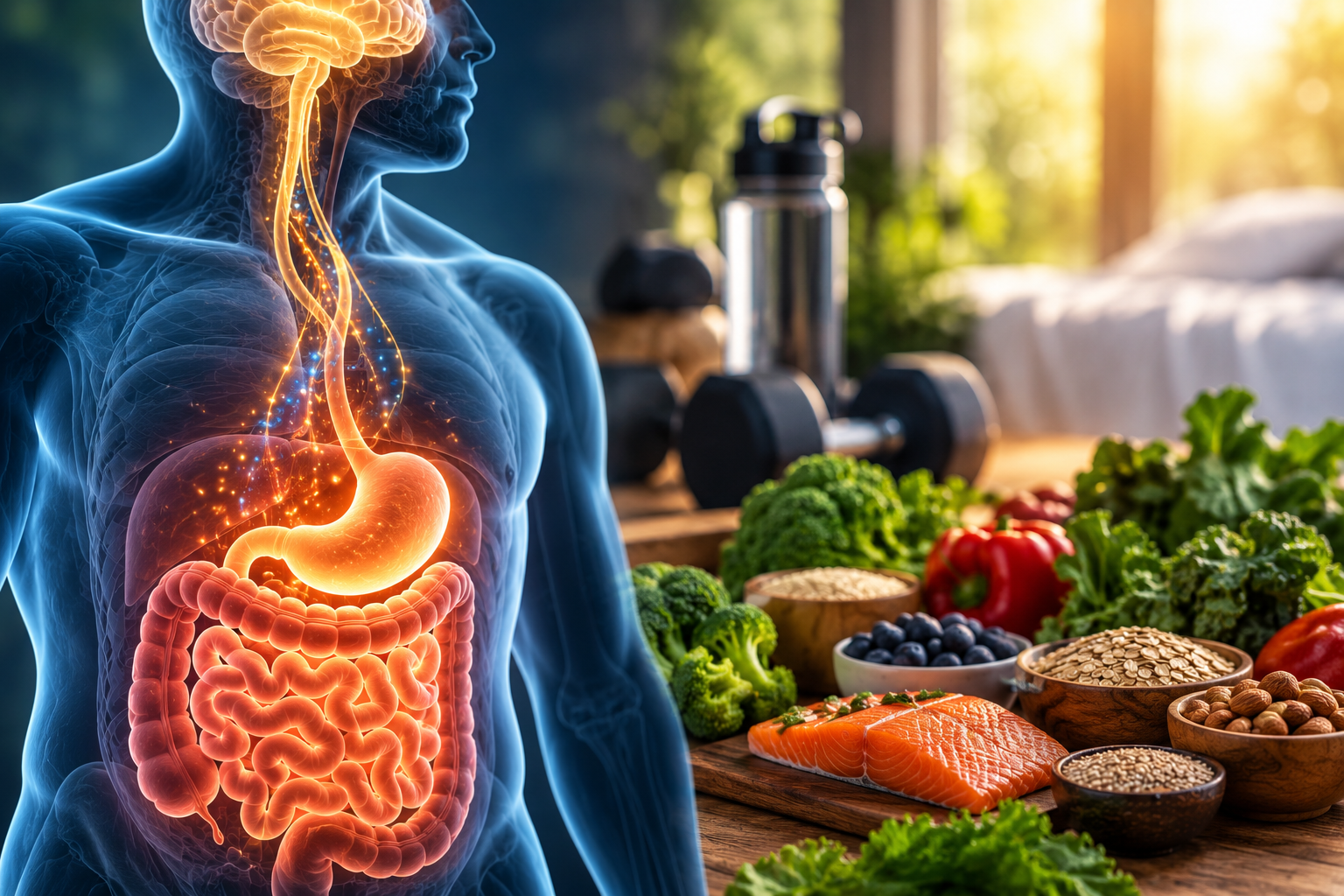
GLP-1, or glucagon-like peptide-1, is one of several hormones involved in the biological system regulating appetite, digestion and blood sugar. Specialized cells in the digestive tract release GLP-1 in response to nutrients, helping coordinate communication between the gut, brain and pancreas after we eat.
Among its actions, GLP-1 helps enhance glucose-dependent insulin secretion, suppress glucagon, slow gastric emptying and promote satiety. In simple terms, it’s one of the signals involved in telling the body that nutrients have arrived and helping regulate what happens next.
Natural GLP-1 and GLP-1 Medications Aren’t the Same Thing
The fact that your body naturally produces GLP-1 doesn’t mean eating the right foods can reproduce what a GLP-1 medication does.
Naturally produced GLP-1 has an extremely short life in circulation, roughly one to two minutes, because it’s rapidly broken down by an enzyme called DPP-4. GLP-1 receptor agonist medications are designed to resist that rapid breakdown and produce much longer activity at the GLP-1 receptor.
That helps explain why medications such as semaglutide can have effects that natural GLP-1 simply doesn’t sustain for the same length of time. Tirzepatide goes even further because it acts on both GIP and GLP-1 receptors, so technically it isn’t simply a GLP-1 medication.
Lifestyle and medication aren’t interchangeable. But understanding what these medications target can teach us something extremely important about the biology of appetite.
Appetite Is Biology, Not Just Willpower
For decades, people struggling with their weight were essentially told the same thing: eat less, move more and have more discipline. If they remained hungry, regained weight or constantly thought about food, the assumption was often that they simply weren’t trying hard enough.
The success of medications that alter biological signals involved in appetite should force us to reconsider that explanation. If changing signaling through pathways such as GLP-1 can dramatically change hunger and food intake in some people, then appetite clearly isn’t simply a test of character or discipline.
Hunger and satiety are regulated through a complex network involving the digestive tract, brain, nervous system and multiple hormones. GLP-1 is part of that system, but it isn’t operating alone.
Instead of continually asking, “How do I control my hunger?” perhaps we should also be asking, “What influences the biological systems that regulate my hunger?”
What You Eat Can Influence Satiety
Food itself participates in this system. Protein, carbohydrate and fat entering the digestive tract can stimulate gastrointestinal signals, including GLP-1 and other hormones involved in digestion and appetite. Fiber, food structure, meal composition and the rate at which food moves through the digestive system can also influence how satisfying a meal becomes.
This is one reason a meal built around adequate protein, vegetables and minimally processed foods can feel very different from a meal dominated by highly refined foods, even when both provide plenty of energy. We’re not simply putting calories into a container, we’re initiating a series of digestive, hormonal and neural responses.
That doesn’t mean there’s a magical “GLP-1 diet,” and I would be very skeptical of anyone selling one. No combination of foods should be presented as the nutritional equivalent of pharmacological GLP-1 receptor activation. What nutrition can do is support the normal physiological systems involved in hunger, satiety, glucose regulation and metabolic health.
Sleep, Stress and Movement Matter Too
Appetite regulation doesn’t stop with food. Inadequate or disrupted sleep can affect hunger, satiety, insulin sensitivity and food intake, which helps explain why nutrition can become considerably more difficult when someone is chronically sleep deprived.
Stress can influence many of these same behaviors and metabolic processes, while physical activity affects glucose regulation, insulin sensitivity, energy expenditure and overall metabolic health. Resistance training becomes particularly important because maintaining and building muscle gives the body a larger metabolically active tissue for glucose disposal.
These factors interact with one another, which is why trying to address a complex appetite problem through one isolated intervention can miss much of the bigger picture.
Where GLP-1 Medications Fit Into the Conversation
None of this means GLP-1-based medications are bad or that people shouldn’t use them. For appropriate individuals, these medications can be extremely useful tools, and their effectiveness has changed the treatment of obesity and type 2 diabetes.
But medication doesn’t make nutrition, resistance training, sleep, movement or body composition irrelevant. Those things still influence the health of the person taking the medication, particularly when the objective extends beyond simply seeing a lower number on the scale.
Medication and lifestyle don’t have to be enemies. Medication can directly influence biological pathways involved in appetite and glucose regulation, while lifestyle can address nutrition quality, physical capacity, muscle mass, insulin sensitivity and many of the factors involved in long-term metabolic health.
Bottom Line
GLP-1 medications have taught us something important that goes far beyond weight loss: appetite is biological. Hunger, fullness and the drive to eat are influenced by sophisticated systems involving the gut, brain, hormones and metabolism, not simply someone’s ability to exercise willpower.
Your body was using GLP-1 and many other biological signals to regulate appetite long before most people had ever heard the term. These medications didn’t create that biology, they gave us a powerful way to influence part of it.
What I don’t want us to lose in all the attention surrounding these medications is interest in the person underneath the medication. Nutrition, muscle, physical activity, sleep, blood-sugar regulation and overall metabolic health still matter, whether someone uses medication or not.
Perhaps the future of metabolic health isn’t about choosing between medication and lifestyle. Perhaps it’s about understanding when medication can be useful while continuing to support the biological systems that influence health for the rest of a person’s life.
And maybe the most important question surrounding GLP-1 isn’t simply, “How much weight can this medication help someone lose?”
Maybe it’s, “What can we learn from these medications about how the human body regulates appetite in the first place?”
Now THAT is a conversation I think we need to be having.
About the Author
Coach Tony is a Board-Certified Nutrition Specialist and Master Personal Trainer with over 40 years of experience in the health and fitness industry. He specializes in metabolic health, fat loss, and body composition, helping clients restore their metabolism through structured nutrition and resistance training.