
How Much Water Should You Drink Each Day? What the Science Actually Says
Hydration seems like it should be one of the simplest aspects of nutrition, yet somehow, we’ve managed to make it incredibly confusing. Depending on where you get your information, you may have been told to drink eight glasses of water a day, 100 ounces, half your body weight in ounces or even a gallon, as though there is one formula that can determine exactly how much water every person needs.
The problem is that human physiology doesn’t work that way. Your fluid requirements are influenced by your body size, activity level, how much you sweat, temperature and humidity, diet, age, health status and even certain medications.
So how much water do we really need, and how do we know when we’re getting enough?
Let’s dig in.
How Much Water Do We Actually Need?
One reason this gets confusing is how established recommendations are interpreted. The National Academies established an Adequate Intake for total water of approximately 2.7 liters per day for adult women and 3.7 liters for adult men. But there is an important word in that recommendation that often gets overlooked: total.
Those numbers don’t represent the amount of plain water you are supposed to drink. Total water includes drinking water, other beverages and the water naturally contained in food. In the data used to establish these recommendations, approximately 19 percent of total water intake came from food, while about 81 percent came from water and other beverages.
Coffee and tea contribute to fluid intake as well. While caffeine can have a temporary diuretic effect, the available evidence does not support the idea that caffeinated beverages automatically leave you dehydrated. Alcohol can also contribute fluid, but because of its effects on urine production and the body, I certainly wouldn’t recommend looking at alcohol as a way to stay hydrated.
Another important point is that these numbers are Adequate Intakes, not precise requirements that every person needs to hit each day. Healthy people can maintain normal hydration across a fairly wide range of fluid intakes, which is exactly why these recommendations shouldn’t be turned into another rigid formula.
Why Our Water Needs Are Different
Your body has a remarkably sophisticated system for regulating fluid balance. Thirst is part of that system, and your kidneys are constantly adjusting how much water they conserve and how much they eliminate based on what your body needs. For most healthy adults under normal conditions, thirst provides useful feedback, although that response can become less sensitive as we get older.
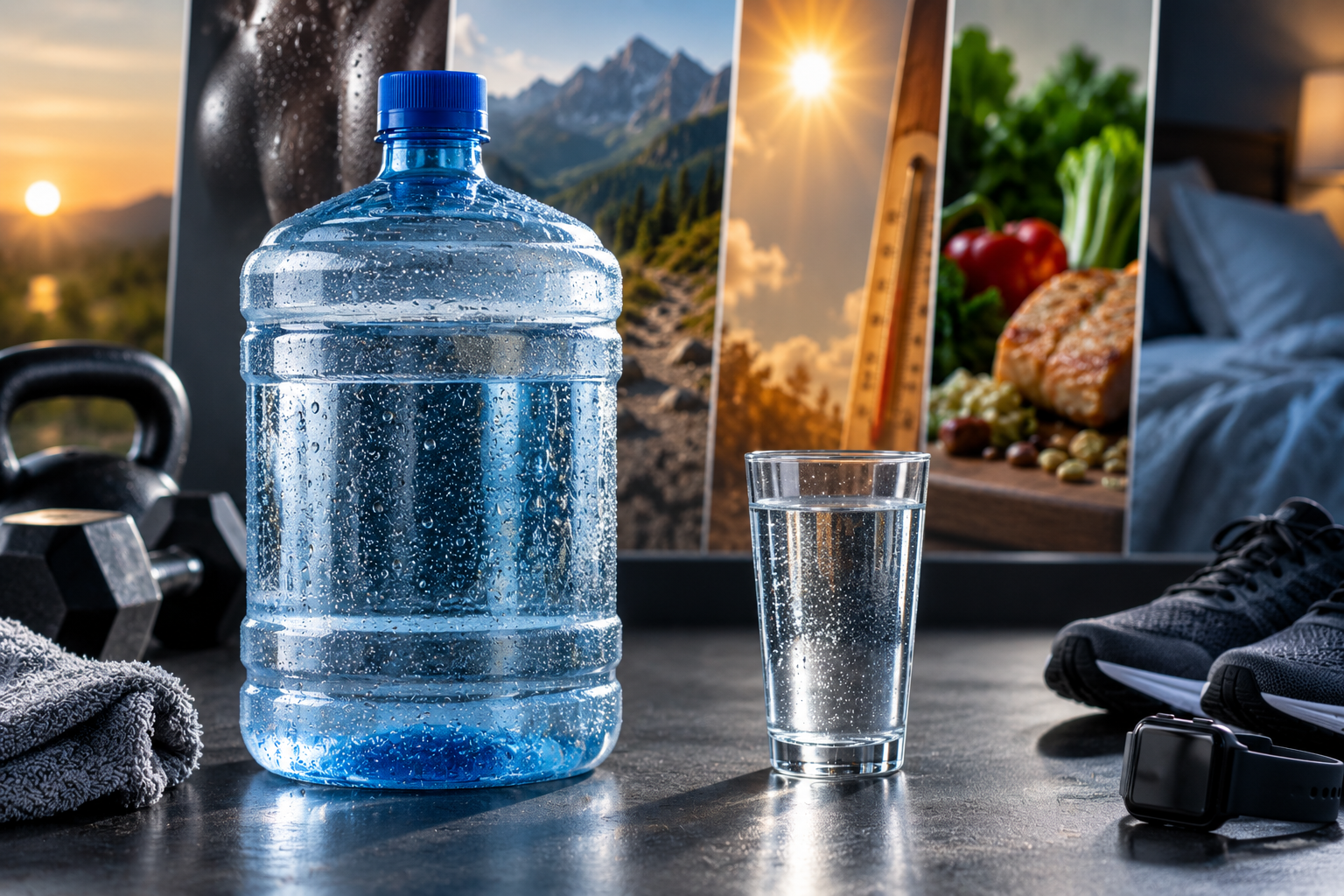
Activity and environment can change those needs considerably. Someone sitting at a desk in an air-conditioned office doesn’t necessarily have the same fluid requirements as someone training hard, working outside or sweating for several hours in hot, humid conditions. Exercise, heat and sweating increase fluid losses, which means those fluids need to be replaced.
Diet also contributes to the equation because foods vary considerably in their water content. Someone eating plenty of fruits, vegetables and other high-water foods may receive more of their daily fluid from food than someone eating primarily dry foods.
And what about constantly running to the bathroom after dramatically increasing your water intake? Your kidneys don’t simply store all the additional water you drink. If you’re consuming considerably more than your body currently needs, much of that excess is going to be eliminated, so increased urination doesn’t necessarily mean you’re better hydrated.
Can You Drink Too Much Water?
Water is essential, but more isn’t endlessly better. Drinking excessive amounts, particularly over a relatively short period, can interfere with the body’s ability to maintain normal fluid and electrolyte balance.
Sodium plays an important role in that balance. If someone consumes water faster than the body can eliminate it, the sodium concentration in the blood can become dangerously diluted, resulting in a condition called hyponatremia. Severe cases can be life-threatening.
Electrolytes become especially relevant when someone is losing substantial amounts of fluid through prolonged exercise and heavy sweating. Sweat contains both water and electrolytes, particularly sodium, so under those circumstances replacing fluid losses isn’t always just about replacing water.
That doesn’t mean the average person needs an electrolyte drink every time they exercise or needs to start adding electrolytes to every bottle of water. For most normal daily activity, food and fluids can provide what the body needs. The circumstances change when exercise becomes prolonged, sweat losses become substantial or environmental conditions significantly increase those losses.
How Do You Know If You’re Drinking Enough?
For most healthy people, thirst is a reasonable place to start. Fluid intake should then adjust with activity, sweating, heat and other circumstances that increase water losses rather than being dictated by an arbitrary number of ounces.
Urine can provide some practical feedback as well. Very dark, concentrated urine can be one indication that you need more fluid, while completely clear urine throughout the day combined with constant trips to the bathroom may indicate that you’re pushing more water than you need. Urine color isn’t a perfect hydration test because foods, supplements, medications and certain health conditions can affect it, but it can be useful when considered along with thirst, activity and sweating.
There are also situations where generic hydration advice simply doesn’t apply. Certain kidney and heart conditions, medications and other health circumstances can significantly alter how the body handles fluids. In those situations, individual fluid needs may be very different from those of an otherwise healthy person.
The goal isn’t to find one perfect number and force yourself to hit it every day. It’s to understand that hydration needs change and learn to adjust your intake according to what your body is doing and the conditions you’re putting it through.
Bottom Line
Water is essential for temperature regulation, circulation, nutrient transport, waste removal and normal cellular function, so staying appropriately hydrated matters. But that doesn’t mean everyone needs eight glasses, 100 ounces, half their body weight in ounces or a gallon of plain water every day.
For most healthy people, thirst, normal fluid consumption and adjustments for activity, sweating and environmental conditions provide a much more practical approach than chasing an arbitrary number. Hydration is about maintaining fluid balance, not seeing how much water you can drink.
About the Author
Coach Tony is a Board-Certified Nutrition Specialist and Master Personal Trainer with over 40 years of experience in the health and fitness industry. He specializes in metabolic health, fat loss, and body composition, helping clients restore their metabolism through structured nutrition and resistance training.