
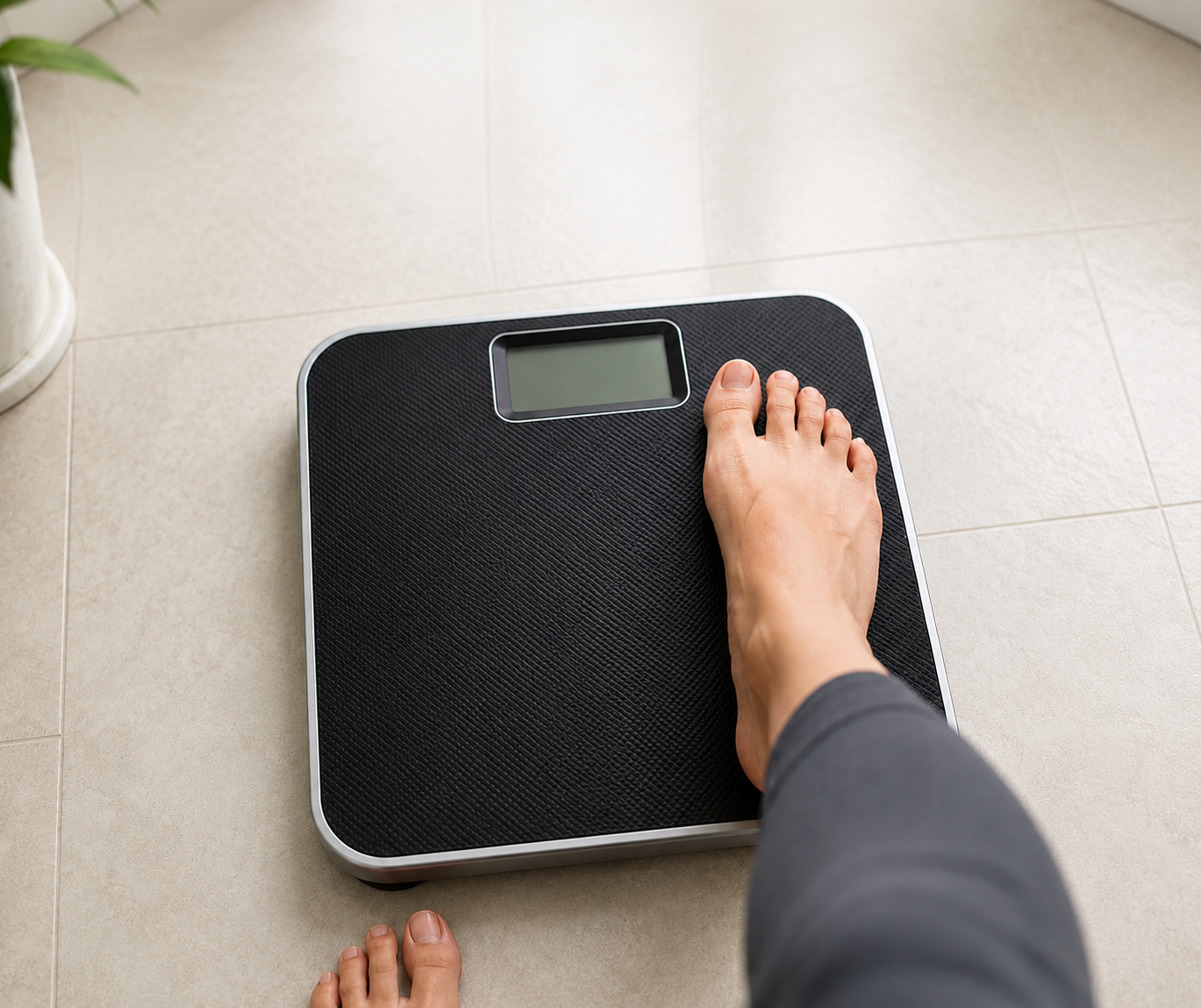
Are You Using Your Scale the Right Way?
The scale isn’t lying to you, but it may not be telling you what you think it is.
Have you ever stepped on the scale first thing in the morning and immediately let that number determine how you felt about yourself? If the number was lower than the last time you weighed yourself, you probably felt encouraged and believed all your hard work was finally paying off. But if it was higher, despite eating well and exercising consistently, you may have found yourself feeling frustrated, discouraged, or questioning whether anything you were doing was actually working.
It’s a situation millions of people experience every single week. Someone follows their nutrition plan, exercises consistently, makes healthier choices throughout the week, and genuinely believes they’re moving in the right direction. Then comes weigh-in day. Instead of seeing the number they were hoping for, the scale shows little change or, even worse, a slight increase. Within seconds, confidence turns into disappointment, motivation begins to fade, and they begin wondering whether their efforts are making any difference at all.
Most people assume the scale measures one thing and one thing only: body fat. They believe that if the number goes down, they’ve lost body fat, and if it goes up, they’ve gained it. In reality, that’s not what a bathroom scale was designed to measure. It simply reports your total body weight at that moment in time. Without understanding what contributes to that number, it’s easy to misinterpret what the scale is telling you and become discouraged when you’re actually making progress.
Before discussing the best way to use your scale, it’s important to first understand what the scale is actually measuring and why that number naturally changes from day to day. Once you understand those two principles, using the scale becomes much less frustrating and much more meaningful.
What Does the Scale Actually Measure?
A bathroom scale measures one thing and one thing only: your total body weight. It does not analyze what makes up that weight, nor can it distinguish between the different tissues and substances inside your body. It simply measures your total body weight at that exact moment.
Think of it this way. If you place a suitcase on a scale, the scale can tell you the suitcase weighs 50 pounds, but it has no idea what’s inside. It can’t tell you how much of that weight is clothing, shoes, books, or toiletries. It simply reports the combined weight of everything in the suitcase.
Your body works much the same way.
When you step on a scale, it measures the combined weight of your body fat, lean muscle tissue, bones, organs, water, blood, glycogen, food moving through your digestive system, and waste waiting to be eliminated. Every one of those components contributes to your total body weight, yet the scale has no ability to separate one from another. It simply displays a single number representing the combined weight of everything inside your body at that particular moment.
This is where so many people become confused. They assume every pound gained or lost represents a pound of body fat. Physiologically, that’s almost never the case. Your body weight is constantly changing as your body digests food, regulates fluid balance, stores and uses energy, and carries out thousands of normal biological processes every day. Many of those changes have little, if anything, to do with gaining or losing body fat.
Understanding this one principle changes the way you interpret the scale. Instead of assuming every change in body weight reflects a change in body fat, you begin to recognize that the scale is simply measuring everything that makes up your body weight at that moment. Once you understand that distinction, you’re ready to answer the next question: Why does your weight fluctuate so much from one day to the next?
Why Does Your Weight Change From One Day to the Next?
One of the most frustrating things about using a scale is watching your weight change from one day to the next, even when you’ve been eating well and exercising consistently. If you’ve ever stepped on the scale two mornings in a row and noticed a difference of one, two, or even three pounds, you’re certainly not alone. Those fluctuations are completely normal and happen to everyone.
The reason is simple. Your body is a dynamic, living system that is constantly carrying out thousands of normal physiological processes. Every hour of every day it is digesting food, absorbing nutrients, regulating fluid balance, storing and using energy, eliminating waste, repairing tissues, and responding to changes in your environment. Because all of these processes influence your total body weight, it’s perfectly normal for the number on the scale to rise and fall from one day to the next, even when your body fat hasn’t changed.
One of the biggest contributors to these short-term changes is water. The amount of water your body retains can change from one day to the next based on factors such as your carbohydrate intake, sodium intake, hydration status, hormone levels, physical activity, and even the weather. For example, whenever your body stores carbohydrates for future energy, it stores them in the form of glycogen inside your muscles and liver. Every gram of glycogen is stored along with several grams of water. As your glycogen stores increase, your body weight naturally increases. As those glycogen stores are used for energy, much of that water is released and your body weight decreases.
Sodium also plays an important role. Eating foods that are high in sodium can cause your body to temporarily retain additional water while it works to maintain its normal fluid balance. That’s one reason why many people notice that their rings feel tighter, their face appears puffier, or their ankles seem swollen after eating restaurant meals, pizza, chips, or other highly processed foods. Fortunately, this is usually temporary. As your body restores its normal fluid balance over the next several days, much of that retained water is naturally eliminated.
Food moving through your digestive system, differences in hydration, inflammation from a challenging workout, and normal hormonal fluctuations can all contribute to short-term changes in body weight as well. When you add all of these factors together, it becomes much easier to understand why the scale can fluctuate several pounds over the course of a few days without any meaningful change in body fat.
This is exactly why it’s so important not to judge your progress based on a single weigh-in. The number you see today reflects everything contributing to your body weight at that particular moment, not simply the amount of body fat you’ve gained or lost. That’s why learning how to interpret the scale correctly is just as important as stepping on it in the first place.
Why Daily Weigh-Ins Can Be Misleading
Now that you understand why your body weight naturally fluctuates, it’s easier to see why weighing yourself every day often creates more confusion than clarity. The amount of body fat you gain or lose over a single day is relatively small, while normal physiological fluctuations in water balance, glycogen storage, sodium intake, digestion, and hydration can cause your body weight to change by several pounds. As a result, those normal fluctuations can easily mask the small changes in body fat that are taking place beneath the surface.
Imagine trying to watch a tree grow by measuring it every hour. Although the tree is growing, the change is so small that you wouldn’t be able to appreciate it from one measurement to the next. If you came back a month later, however, the growth would be much easier to recognize. Fat loss works in much the same way. It occurs gradually over time, but the normal day-to-day fluctuations in body weight often make it difficult to recognize when you’re looking at the scale every morning.
This is one of the primary reasons people become discouraged. They may have followed their nutrition plan all week, exercised consistently, and made healthier choices every day, only to step on the scale and see a number that doesn’t reflect the progress they’ve actually made. Too often, they conclude that nothing is working, when in reality they’re simply allowing normal biological fluctuations to overshadow the gradual changes that are taking place beneath the surface.
The solution isn’t to stop using the scale. The solution is to stop expecting it to provide meaningful answers every single day. When you begin looking at your body weight over longer periods of time instead of reacting to isolated daily measurements, the true trend becomes much easier to recognize. That’s when the scale changes from being a source of frustration to becoming a valuable tool for measuring long-term progress.
So, What’s the Right Way to Use the Scale?
Now that you understand what the scale is actually measuring and why your body weight naturally fluctuates, using the scale correctly becomes much more straightforward. The goal is no longer to see what your weight happens to be today. The goal is to measure your progress under consistent conditions so you can make meaningful comparisons from one week to the next.
That’s why I recommend weighing yourself once per week, on the same day every week, first thing in the morning, after using the bathroom, and before eating or drinking anything. Use the same scale, place it in the same location, and wear the same type of clothing, or no clothing at all, each time you weigh yourself. The more consistent the conditions, the more meaningful the comparison becomes.
The reason for this recommendation has nothing to do with the particular day you choose. It has everything to do with controlling variables. If one week you weigh yourself before breakfast, the next week after breakfast, one time fully dressed and another time in your pajamas, or one day after an intense workout and another after a weekend of eating out, you’re no longer making a fair comparison. You’re comparing measurements that were taken under completely different conditions.
By weighing yourself the same way each week, you remove much of the normal day-to-day variability we’ve already discussed. You won’t eliminate every variable because human physiology is constantly changing, but you’ll minimize enough of them to make the number on the scale much more useful. Instead of reacting to normal biological fluctuations, you’ll begin recognizing genuine changes in your body weight over time.
Perhaps the greatest benefit of weekly weigh-ins isn’t just improved accuracy. It’s the change in mindset they create. Instead of allowing the scale to influence your mood every morning, you begin focusing on the behaviors that actually produce results. Your attention shifts from chasing numbers to consistently practicing healthy habits, knowing that if those habits remain consistent, the long-term trend will eventually reflect the work you’ve been doing all along.
The Scale Is Only One Piece of the Puzzle
Even when you’re using your scale correctly, it’s important to remember that it tells only part of the story. While body weight can be a useful indicator over time, it should never be the only way you evaluate your health or the success of your efforts.
Imagine two people who each weigh 180 pounds. Looking only at the scale, you might assume they have similar bodies and similar health. In reality, one person could have a high percentage of body fat with very little muscle, while the other has significantly more lean muscle and much less body fat. Although they weigh exactly the same, their body composition, metabolism, strength, physical function, and overall health can be dramatically different.
This is why body weight and body fat should never be confused. It’s entirely possible to lose body fat while preserving or even increasing lean muscle tissue. When that happens, the number on the scale may change very little, yet your body composition is improving, your metabolism is becoming healthier, and your body is functioning more efficiently. If you judge your success solely by the number on the scale, you may completely overlook the meaningful progress taking place inside your body.
There are many other indicators that deserve your attention as well. Your clothes may begin fitting more comfortably. Everyday activities may become easier. You may notice improvements in your energy, strength, endurance, sleep quality, blood sugar control, or your overall sense of well-being. These changes often occur before the scale reflects them, yet they are some of the clearest signs that your body is responding positively to the healthy choices you’re making.
The scale should be viewed as one piece of a much larger picture. When you combine it with improvements in body composition, physical performance, energy, and overall health, you gain a much more complete understanding of your progress. Instead of allowing one number to define your success, you begin recognizing the many ways your body improves as healthier habits become part of your lifestyle.
Using the Scale as a Tool, Not a Judge
The scale has earned an unfair reputation over the years. Some people fear it, others avoid it altogether, and many allow it to determine whether they’ve had a successful week. In reality, the scale isn’t judging you. It’s simply providing information. The value of that information depends on understanding what the scale is measuring and interpreting the results within the proper context.
Once you recognize that your body weight naturally fluctuates and that the scale measures much more than body fat, it’s much easier to view the number objectively. A higher number no longer means you’ve failed, just as a lower number doesn’t automatically mean you’ve lost body fat. Instead of reacting emotionally to every change, you begin looking for consistent trends while continuing to focus on the daily habits that truly improve your health.
Perhaps that’s the greatest lesson of all. The scale doesn’t determine your success. Your daily habits do. Consistently eating nutritious foods, staying physically active, getting adequate sleep, and repeating those behaviors day after day are what improve your health over time. The scale simply provides one way of measuring the results of those efforts.
Bottom Line
The scale can be one of the most valuable tools you own, but only when you understand what it’s actually measuring. It measures your total body weight, not just your body fat. Because body weight naturally changes from day to day, reacting emotionally to every fluctuation often leads to frustration instead of understanding.
Using the scale correctly is about creating consistency. Weigh yourself once each week under the same conditions, look for long-term trends rather than day-to-day changes, and remember that the number on the scale is only one indicator of your progress. Improvements in body composition, strength, energy, endurance, blood sugar control, and even how your clothes fit all tell an important part of your health story.
The next time you step on the scale, don’t ask yourself, “Did I lose weight today?” Instead, ask yourself, “Am I consistently giving my body what it needs to become healthier?” That’s the question that truly determines your success because it’s the one you can control. If you’re consistently practicing healthy habits, your body will respond over time, and the scale will eventually reflect those changes.
Understanding how to use the scale correctly doesn’t just change the way you interpret a number. It changes the way you approach your entire health journey. When you stop asking the scale to answer a question it was never designed to answer, you replace frustration with understanding. And when you replace frustration with understanding, you’re far more likely to stay consistent, make better decisions, and achieve long-term success.
About the Author
Coach Tony is a Board-Certified Nutrition Specialist and Master Personal Trainer with over 40 years of experience in the health and fitness industry. He specializes in metabolic health, fat loss, and body composition, helping clients restore their metabolism through structured nutrition and resistance training.