
Get instant access to cutting edge Nutrition, Fitness and Health tips and YES even Healthy Recipes.
Most people think GLP-1 is something you need to take.
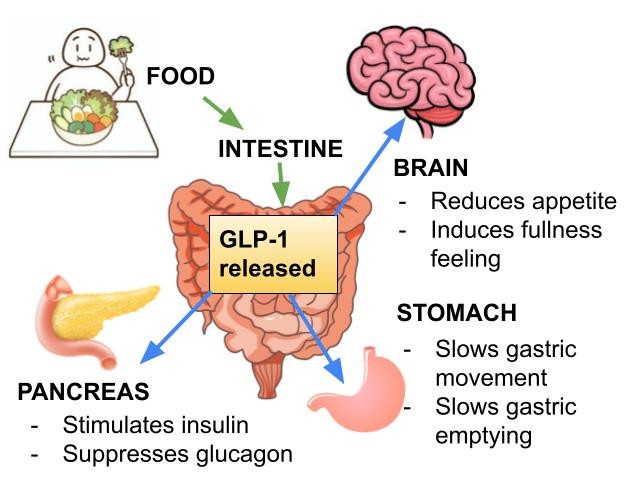
But the truth is, GLP-1 (glucagon-like peptide-1) is a hormone your body is already designed to produce—every single day—through proper nutrition and movement.
It’s released in the gut after eating and plays a powerful role in:
GLP-1 isn’t a hack.
It’s a built-in system.
If your body isn’t producing enough GLP-1, appetite feels louder, cravings feel stronger, and fat storage becomes easier.
That’s not a character flaw.
It’s a signaling problem.
Years of dieting, processed foods, blood sugar swings, low protein intake, muscle loss, stress, and poor sleep all interfere with the body’s ability to release GLP-1 properly.
When that happens, the body doesn’t “give up.”
It adapts by driving hunger and conserving energy.
Prescription GLP-1 drugs work by artificially activating the same receptors your natural hormone uses. They can quiet hunger—but they do so by overriding the system, not repairing it.
This is the key distinction most people miss.
One forces compliance.
The other rebuilds regulation.
When GLP-1 production improves naturally, the body regains its ability to:
This is not about eating less forever.
It’s about teaching the body to regulate itself again.
Natural GLP-1 works alongside insulin, leptin, and other hormones—rising and falling exactly when needed. Over time, appetite becomes calmer, fullness arrives sooner, and fat loss stops feeling like a fight.
Research continues to show that GLP-1 secretion improves with:
These signals tell the body it is safe, fed, and supported—the conditions required for proper appetite control.
Here’s the truth that changes everything:
If your body isn’t producing enough GLP-1, the solution isn’t to replace it indefinitely.
The solution is to restore the conditions that allow your body to make it again.
Long-term weight loss doesn’t come from suppressing hunger forever.
It comes from restoring the signals that regulate it.
GLP-1 medications may reduce appetite temporarily.
But natural GLP-1 restores metabolic function.
One manages hunger.
The other rebuilds trust between your body and food.
And restored systems always outperform forced shortcuts over time, hands down!

Get instant access to cutting edge Nutrition, Fitness and Health tips and YES even Healthy Recipes.