
Get instant access to cutting edge Nutrition, Fitness and Health tips and YES even Healthy Recipes.
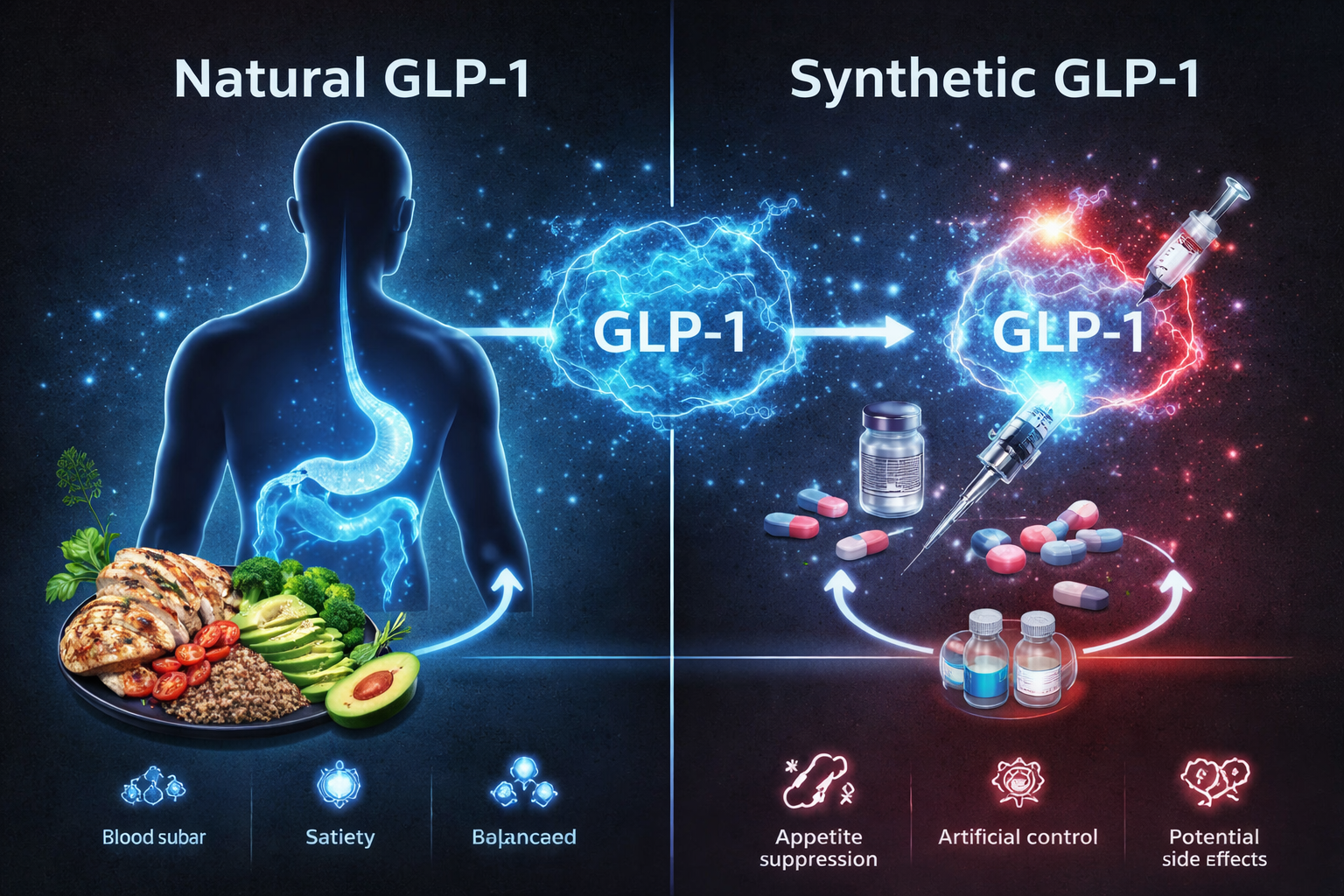
Most people have been introduced to GLP-1 through weight loss medications. It is commonly described as the hormone that shuts down appetite, reduces cravings, and makes it easier to eat less. That is accurate, but it is only a surface-level understanding of what this system actually does. When you look deeper, GLP-1 is not just about eating less. It is about how the body regulates energy, communicates safety, and maintains metabolic control.
GLP-1 is part of a highly coordinated communication network between the gut, brain, and pancreas. It is naturally released when you eat, especially in response to nutrients that require digestion and absorption. Once released, it slows gastric emptying, enhances insulin secretion, stabilizes blood sugar, and sends a satiety signal to the brain indicating that sufficient nutrients have been consumed.
This signal is precise and purposeful. It is designed to help the body regulate intake without conscious effort. When functioning properly, it allows appetite to rise and fall in a predictable and controlled manner.
Satiety is often misunderstood as simply feeling full. In reality, it represents something much deeper. It is a signal of biological safety. When natural GLP-1 signaling is strong, the body interprets that as stability in the environment. Hunger increases when energy is needed and decreases when those needs are met. Cravings become manageable, energy remains steady, and the nervous system is not constantly driving the search for food.
This is what true regulation looks like. The system is working without constant mental effort.
When GLP-1 signaling becomes impaired, the body does not treat this as a minor issue. It interprets it as a potential threat to energy availability. In response, hunger becomes more persistent, cravings intensify, and blood sugar regulation becomes less stable. The body shifts into a defensive state, prioritizing energy acquisition and storage.
This is where many individuals attempt to rely on willpower. The problem is that willpower is governed by the cognitive brain, while appetite is regulated by deeper survival mechanisms. When these systems are in conflict, the survival system takes priority. The result is not a failure of discipline, but a predictable biological response.
Pharmaceutical GLP-1 medications enter this system by mimicking the hormone externally. They enhance satiety signaling and suppress appetite, often producing rapid changes in food intake. For some individuals, this can provide short-term relief from constant hunger.
However, this approach is fundamentally different from restoring the body’s natural ability to regulate itself. Suppression forces a result. Restoration rebuilds the system.
When the signal is overridden, the underlying drivers of dysregulation may still exist. When the signal is restored naturally, the body regains its ability to manage appetite, blood sugar, and energy balance as it was designed to do.
Natural GLP-1 production is influenced by both nutrition and metabolic demand. The goal is to create conditions that support consistent and effective signaling.
Prioritize protein intake. Meals that contain adequate protein stimulate a stronger and more sustained GLP-1 response, helping to improve satiety and reduce unnecessary hunger.
Focus on fiber and whole food structure. Foods that digest more slowly contribute to a more stable release of nutrients, reinforcing the satiety signal and improving blood sugar control.
Build and maintain muscle mass. Resistance training increases metabolic demand and improves how the body processes incoming nutrients, strengthening the communication loop between intake and regulation.
These are not quick fixes. They are foundational inputs that allow the body to function properly.
When GLP-1 signaling is working as intended, control feels different. Hunger is no longer something that must be constantly managed through effort. It becomes predictable. Meals feel complete. The constant mental negotiation around food begins to fade.
Suppressing hunger forces the body into compliance. Restoring GLP-1 signaling allows the body to regulate itself.
The goal is not to silence your biology. The goal is to make your biology work for you.

Get instant access to cutting edge Nutrition, Fitness and Health tips and YES even Healthy Recipes.