
What Everyone Gets Wrong About the World’s Best Carb
Most people associate fiber with digestion and keeping you regular, but that’s only part of the story. Fiber is actually a type of carbohydrate, but unlike sugars and starches, it isn’t digested and absorbed in the small intestine in the same way. Depending on the type, it moves through the digestive system relatively intact or is fermented by bacteria in the colon.
That difference is what gives fiber many of its effects on blood sugar, cholesterol, satiety, digestion and gut health. It’s also why I don’t like putting every carbohydrate into the same category. There is a tremendous difference between reducing highly refined carbohydrates and eliminating fiber-rich whole foods simply because both contain carbohydrates.
Soluble and Insoluble Fiber
There are two broad categories of fiber most people should understand, soluble and insoluble. Soluble fiber dissolves in water, and certain types form a thick, gel-like substance in the digestive tract. Think about what happens when oatmeal sits in water and begins to thicken.
That viscosity can slow digestion and carbohydrate absorption, helping moderate how quickly glucose enters the bloodstream following a meal. Certain soluble fibers can also help lower LDL cholesterol. Oats, barley, beans, lentils, apples, citrus fruits and certain vegetables are common sources.
Insoluble fiber works differently. It doesn’t dissolve in water in the same way and generally adds bulk to stool and helps move food and waste through the digestive tract. Vegetables, whole grains, nuts and seeds are common sources. Many whole foods naturally contain a combination of different types of fiber.
Fiber and Your Gut Microbiome
There is another part of the fiber story that doesn’t get nearly enough attention, your gut microbiome. Certain fermentable fibers reach the colon, where bacteria can use them as a food source. During fermentation, those bacteria produce compounds called short-chain fatty acids, including acetate, propionate and butyrate.
Butyrate is particularly important because it serves as an energy source for cells lining the colon and is part of the complex relationship between the gut microbiome and metabolic health. Not every type of fiber is fermented to the same degree, and everyone’s microbiome is different, but some forms of fiber interact directly with the microorganisms living in our digestive tract.
Whole-Food Fiber Versus Added Fiber
When I talk about increasing fiber, I’m primarily talking about fiber that naturally occurs in whole or minimally processed foods, vegetables, fruits, beans, lentils, nuts, seeds and whole grains. I’m not talking about taking a highly processed food, adding isolated fiber to it and assuming we’ve recreated the nutritional value of the original food.
Certain supplemental fibers, such as psyllium, have legitimate physiological benefits, so supplemental or isolated fiber isn’t automatically bad. The distinction is that adding fiber to a highly refined product doesn’t restore the original food structure or everything else that came with the whole food.
A whole pear, for example, isn’t simply sugar plus a few grams of fiber. It also contains water, vitamins, minerals, phytochemicals and its original physical structure. That’s why I want people looking at the entire food rather than allowing one impressive number on a Nutrition Facts panel to determine whether something is healthy.
Don’t Let the Front of the Package Fool You
This is where we can take the science and make it useful in the grocery store. Walk through the bread, cereal or cracker aisle and you’ll see packages covered with words such as “wheat,” “multigrain,” “made with whole grains” and “natural.” The package may be brown, have pictures of wheat across the front and look incredibly healthy, but the front of the package is marketing.
Turn it around and look at the Nutrition Facts panel and ingredient list. When I’m looking at packaged starch products such as breads, wraps, cereals, crackers, pastas, tortillas or bagels, there are two things I look at immediately. First is dietary fiber.
As a practical screening tool, I generally want to see at least 3 grams of fiber per serving. If a grain-based product has virtually no fiber, that’s a good indication that you’re probably looking at something considerably more refined.
Second is the ingredient list. If you’re buying something marketed as whole grain, I want to see an actual whole-grain ingredient listed prominently, preferably first, such as whole oats, whole wheat, whole rye, brown rice, quinoa, buckwheat, millet, bulgur, whole-grain barley or sprouted whole grains.
Don’t assume brown bread means whole grain, and don’t assume “multigrain” means whole grain either. Multigrain simply tells you that more than one grain was used. Even “made with whole grains” doesn’t tell you how much of the product is actually whole grain. Read what’s actually in the product rather than relying on the marketing across the front.
Does Processing Matter?
Yes. An intact grain and a grain that has been milled into flour aren’t physically identical foods. Grinding disrupts the original grain structure and reduces particle size, making the starch more accessible to digestive enzymes. The degree of processing and the physical structure of a food can influence digestion and the blood-sugar response.
Whole-grain flour retains the bran, germ and endosperm of the original grain, while refined flour has had substantial portions of the bran and germ removed, so the two aren’t nutritionally identical.
I’m not telling you that whole-grain bread is suddenly a bad food because the grain was milled into flour. I’m telling you there are degrees of processing, and the words “whole grain” don’t tell you everything about the physical structure of the food you’re eating.
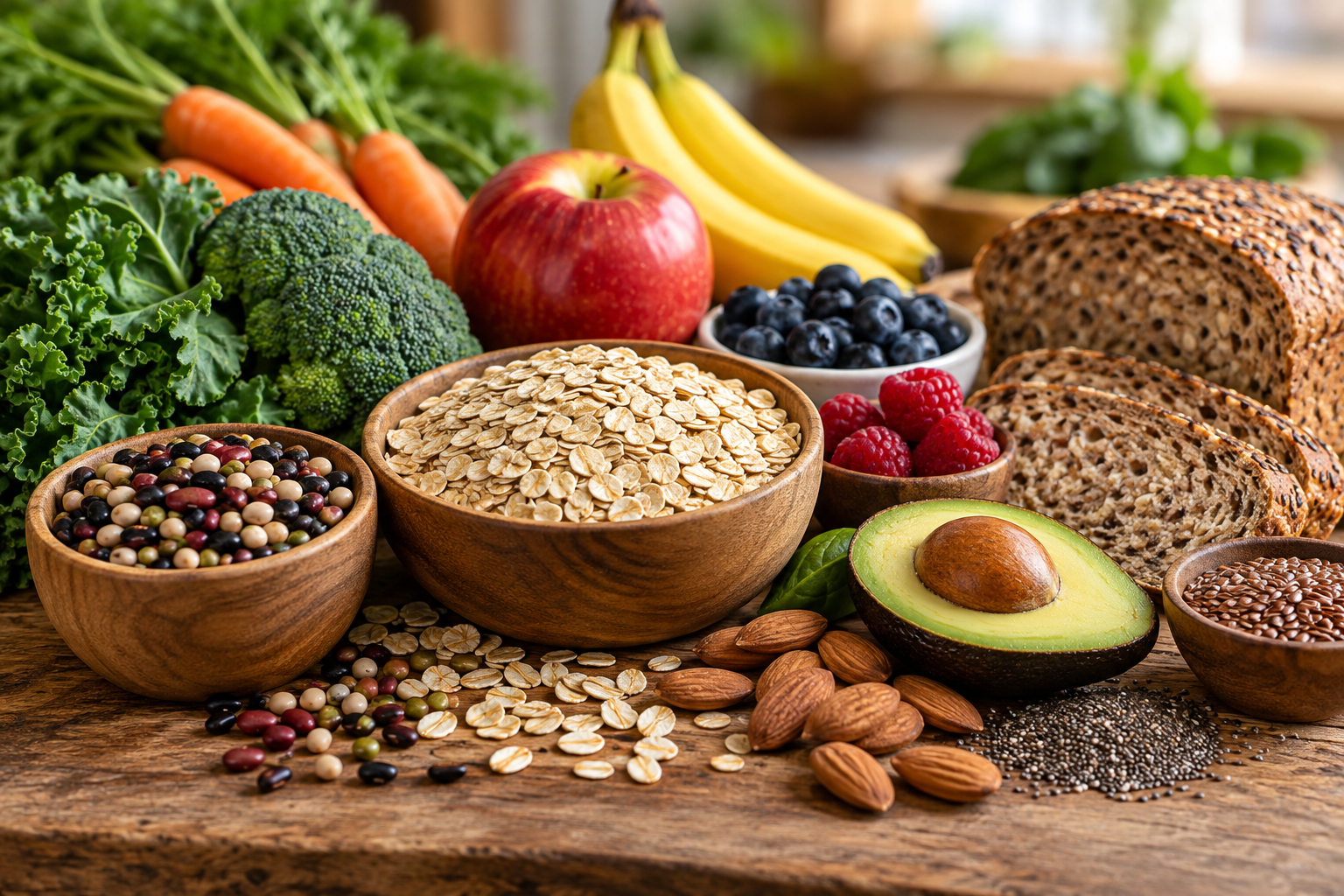
When practical, I prefer foods such as rolled or steel-cut oats, brown rice, quinoa, barley, beans and lentils because they give us carbohydrate in a less refined form while also providing fiber and other nutrients. That doesn’t mean you can never eat bread or pasta.
Why This Matters for Blood Sugar and Metabolic Health
This becomes particularly important when we’re talking about insulin resistance, prediabetes and type 2 diabetes. I want to know what carbohydrate you’re eating, how much you’re eating, how processed it is, how much fiber it contains, what you’re eating with it and, when appropriate, what your blood sugar is doing afterward.
Lentils, intact oats and highly refined breakfast cereal all contain carbohydrate, but comparing them only by total carbohydrate grams ignores meaningful differences in fiber, food structure, processing and nutrient composition. Fiber can slow digestion and glucose absorption, while protein, fat, portion size and the composition of the entire meal can also influence the blood-sugar response.
Individual responses can vary considerably, particularly when insulin resistance is already present. That’s why I would rather evaluate the food and the person’s response to it than simply label a carbohydrate good or bad.
The same principle applies when someone is trying to lose body fat. Fiber-rich whole foods can add volume to a meal and improve satiety, which may make it easier to remain satisfied between meals. Compare eating a whole apple with drinking apple juice. The whole apple requires chewing and retains its fiber and physical structure, while juicing removes much of the fiber and eliminates the intact structure of the fruit.
How Much Fiber Do You Need?
General dietary recommendations are approximately 14 grams of fiber for every 1,000 calories consumed. That translates to roughly 25 grams per day for many adult women and 38 grams for many adult men, although needs change somewhat with age and energy intake.
If you’re going to increase your fiber intake, do it gradually. Going from very little fiber to a large amount overnight can cause gas, bloating and gastrointestinal discomfort, particularly when someone suddenly adds large amounts of vegetables, beans, lentils or whole grains. Adequate fluid intake is also important as fiber intake increases.
Rather than turning fiber into another nutrition calculation, look at the foods making up your diet. Are vegetables showing up regularly? Are you eating whole fruit rather than relying primarily on juice? Do beans, lentils, nuts and seeds have a place in your nutrition, and when you eat grains, are you choosing whole or minimally processed sources most of the time?
Bottom Line
Fiber is much more than something that helps keep you regular. Different types of fiber can influence digestion, glucose absorption, cholesterol, satiety and the activity of microorganisms living in the digestive tract. It also comes naturally packaged in foods that can provide vitamins, minerals, phytochemicals and other nutrients along with it.
The goal isn’t to eliminate carbohydrates, it’s to get better at choosing them. Look beyond the marketing on the package, pay attention to fiber and ingredients, consider how processed the food is and build most of your carbohydrate choices around whole or minimally processed foods.
Once you understand those differences, choosing better carbohydrate sources becomes a lot easier. And that’s why I consider fiber one of the most important carbohydrates in our diet, and quite possibly the world’s best carb.
About the Author
Coach Tony is a Board-Certified Nutrition Specialist and Master Personal Trainer with over 40 years of experience in the health and fitness industry. He specializes in metabolic health, fat loss, and body composition, helping clients restore their metabolism through structured nutrition and resistance training.