
When Did Cholesterol Become the Disease?
Understanding What Your Cholesterol Numbers Really Mean & What Actually Drives Cardiovascular Risk
For decades, millions of Americans have been taught to look at their blood work and immediately associate higher cholesterol with danger and lower cholesterol with better health. Total cholesterol is high, we need to lower it, LDL is high, we need to lower that too, and somewhere along the way cholesterol itself began to sound like the disease. But cholesterol is not cardiovascular disease, and cardiovascular disease is far more complicated than a single number on a laboratory report.
Perhaps the better question isn’t simply, “How high is your cholesterol?” but rather, “What is actually driving your cardiovascular risk?”
Cholesterol is not a poison floating around inside your body waiting to clog your arteries. It is absolutely essential to human life, and your body goes to considerable lengths to make and regulate it because virtually every cell depends on it. Cholesterol is a critical structural component of our cell membranes, your body uses it to produce steroid hormones including testosterone, estrogen, progesterone, cortisol, and aldosterone, it is needed to produce bile acids that help us digest and absorb dietary fats and fat-soluble vitamins, and it is involved in the pathway through which our bodies produce vitamin D.
Its importance to the nervous system is just as significant. The brain is extraordinarily rich in cholesterol, where it is an important component of neuronal cell membranes and myelin, the protective material surrounding nerve fibers, and it plays important roles in normal neurological function. Cholesterol isn’t something our bodies simply need to get rid of, it is a fundamental part of normal human biology.
None of this means cholesterol levels or the lipoprotein particles transporting cholesterol through our bloodstream are irrelevant to cardiovascular disease, because they absolutely matter. What it does mean is that the conversation deserves far more nuance than the message generations of people have absorbed: high cholesterol is bad, low cholesterol is good, HDL is the “good cholesterol,” and LDL is the “bad cholesterol.”
The real conversation is about how cholesterol is transported, how many atherogenic particles are circulating, how long our arteries have been exposed to them, the metabolic environment in which that exposure is occurring, whether atherosclerosis is developing, and what the individual’s overall cardiovascular risk actually looks like.
So, What About Total Cholesterol?
Total cholesterol is exactly what the name suggests, an overall measure of the cholesterol being carried through your bloodstream by the major lipoproteins. It’s useful as part of a standard lipid panel and cardiovascular risk assessment, but the number by itself, whether high or low, tells us relatively little about an individual’s overall cardiovascular health.
It doesn’t tell us how that cholesterol is distributed among the different lipoproteins, how many atherogenic particles are circulating, or what the rest of that person’s metabolic and cardiovascular risk profile looks like. Total cholesterol is a useful piece of information, but it is not a diagnosis of cardiovascular health.
Let’s Start With LDL
Even LDL itself is frequently misunderstood because LDL isn’t actually cholesterol, it is a low-density lipoprotein, essentially a transportation particle that carries cholesterol and other lipids through the bloodstream. Because cholesterol and other fats cannot simply move freely through our water-based blood, the body packages and transports them inside these lipoprotein particles.
When your standard blood test reports LDL-C, the “C” stands for cholesterol, which means LDL-C is essentially telling us how much cholesterol is being carried inside those LDL particles. What it doesn’t necessarily tell us is how many atherogenic particles are actually circulating, and that distinction can be extremely important when we’re trying to understand cardiovascular risk.
An easy way to understand this is to imagine two highways. One highway has 50 trucks carrying cholesterol and the other has 100 trucks carrying approximately the same total amount of cholesterol. If we measure only the amount of cargo being transported, those highways may look relatively similar, but one highway has twice as many vehicles traveling on it.
This is where ApoB, which stands for apolipoprotein B, becomes important. You don’t need to remember the scientific name to understand why it matters. Each major atherogenic lipoprotein particle carries one ApoB molecule, so while LDL-C helps tell us how much cholesterol is being transported, ApoB gives us an estimate of how many potentially artery-damaging particles are doing the transporting. In our highway analogy, LDL-C tells us about the cargo, while ApoB helps tell us how many vehicles are carrying it.
There is another important part of this conversation that often gets overlooked, and that is time. Cardiovascular risk isn’t determined only by how many atherogenic particles are circulating today, it is also influenced by how long the arteries have been exposed to them.
Think of it as cumulative exposure over a lifetime. A person who has carried an elevated ApoB particle burden for decades has experienced substantially more arterial exposure than someone whose elevation developed recently, which is why age, genetics, family history, and lifelong lipid patterns matter when evaluating cardiovascular risk.
Not All LDL Profiles Look the Same
LDL particles can vary in size, density, and composition, which is where you may have heard the terms small, dense LDL and larger, more buoyant LDL. Small, dense LDL frequently appears alongside insulin resistance, elevated triglycerides, lower HDL, and other signs of metabolic dysfunction, making it a useful clue about the metabolic environment in which these particles are circulating.
Going back to our highway analogy, knowing the size of the vehicles gives us additional information, but it doesn’t make the number of vehicles irrelevant. Larger LDL particles should not simply be considered “good LDL” while smaller particles are labeled “bad LDL.” All LDL particles contain ApoB and have the potential to participate in atherosclerosis, which is why particle number, particle characteristics, cumulative exposure, and the metabolic environment all matter.
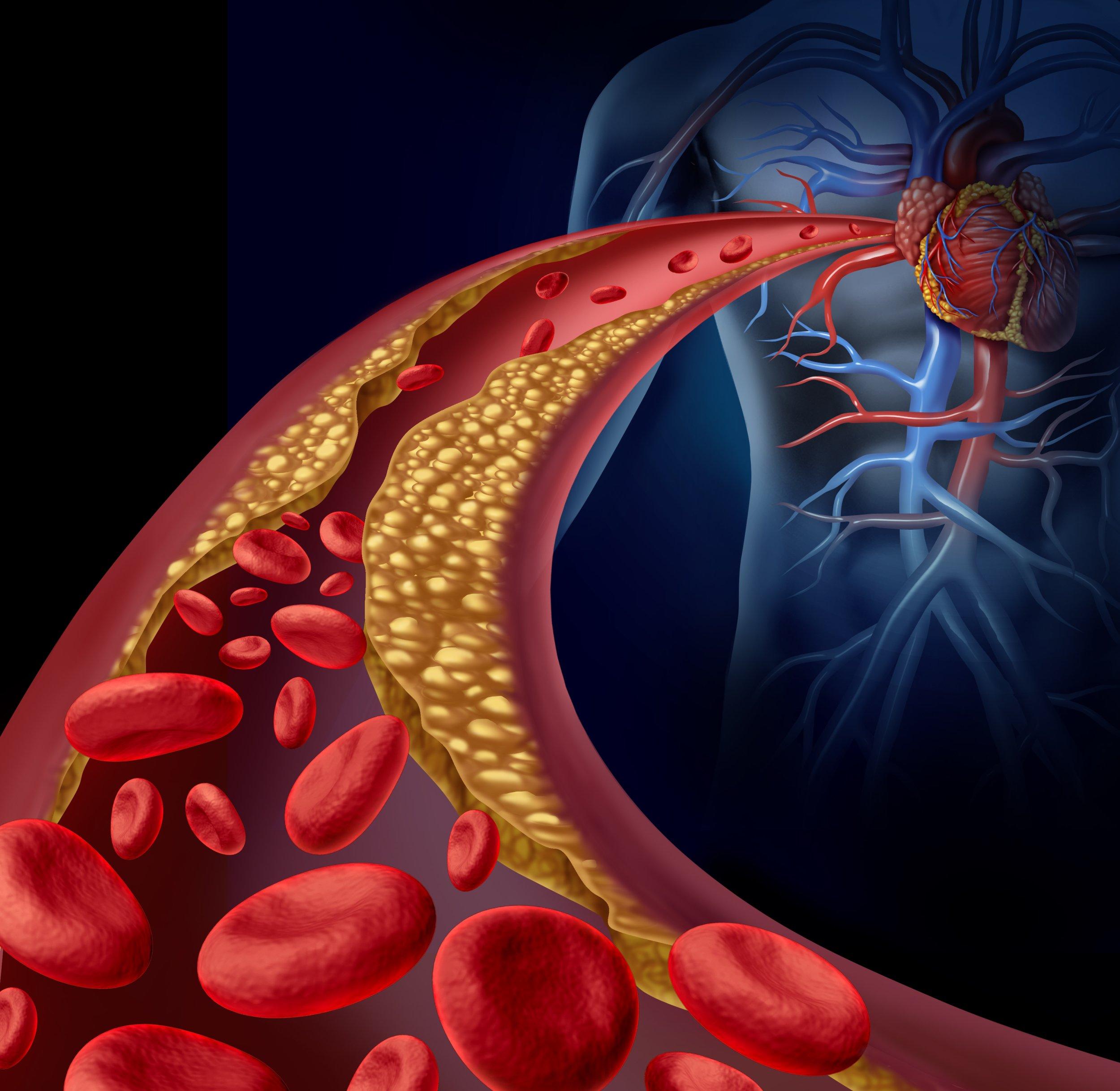
Atherosclerosis is the gradual buildup of plaque within the walls of our arteries, and it doesn’t happen overnight. It develops over years and decades through a complex biological process influenced by atherogenic particle exposure and the cardiovascular and metabolic environment in which that exposure occurs.
This is why an LDL number should be interpreted as one piece of a much larger cardiovascular picture, rather than viewed in isolation.
And What About HDL?
HDL has traditionally been called the “good cholesterol,” but just like LDL, HDL isn’t actually cholesterol, it is another lipoprotein involved in transporting cholesterol through the bloodstream. One of HDL’s important functions involves reverse cholesterol transport, a process in which cholesterol is carried away from peripheral tissues and transported back toward the liver, where it can be recycled or eliminated through bile.
That helps explain why higher HDL-C has historically been associated with lower cardiovascular risk in many populations, but there is an important distinction between an association and assuming that simply making someone’s HDL number higher automatically protects them from cardiovascular disease.
HDL function, particle characteristics, and the metabolic environment in which those particles are circulating all matter. This is another reason the old “HDL good, LDL bad” explanation is simply too crude for what is actually happening inside the body.
A Simple Ratio That Can Tell Us More About the Metabolic Picture
Before we calculate the ratio, it helps to understand what triglycerides actually are. Triglycerides are a form of fat carried in your bloodstream and stored by the body for future energy. When triglycerides remain elevated, particularly alongside lower HDL and other signs of metabolic dysfunction, they can provide an important clue about what is happening metabolically.
There is a useful piece of information sitting right on a standard lipid panel that almost anyone can calculate. Take your triglycerides and divide them by your HDL, and you have what is called the triglyceride-to-HDL ratio, or TG/HDL ratio.
For example, if your triglycerides are 88 and your HDL is 48, you would divide 88 by 48, giving you a TG/HDL ratio of 1.83.
Generally speaking, a lower TG/HDL ratio tends to reflect a more favorable metabolic picture. You will sometimes see a ratio around or below 2 discussed as favorable when these values are measured in mg/dL, but there is no single universally accepted cutoff that defines cardiovascular or metabolic health.
What makes this ratio particularly interesting is its relationship with insulin resistance. When insulin resistance develops, the liver can increase production of triglyceride-rich lipoproteins, and elevated triglycerides frequently appear alongside lower HDL, visceral and liver fat, and impaired glucose regulation. Looking at these patterns together can provide information about metabolic health that an LDL-C number alone may not reveal.
The TG/HDL ratio doesn’t replace LDL-C, ApoB, or a complete cardiovascular assessment, but it can provide another useful piece of information about the metabolic health of the person carrying those cholesterol numbers.
Dietary Cholesterol and Blood Cholesterol Are Not the Same Thing
This is another area that has created enormous confusion. The cholesterol contained in food and the cholesterol measured in your bloodstream are related, but they are not the same thing, and eating cholesterol does not simply mean that cholesterol travels directly from your breakfast into an artery.
Your body regulates cholesterol through a complex system involving absorption from the digestive tract, production primarily by the liver and other tissues, transport through lipoproteins, uptake by cells, recycling, and elimination. Genetics also play a major role, which is one reason individuals can respond differently to dietary cholesterol and dietary fat.
For years, an overly simplistic way of looking at cholesterol helped convince millions of people that foods such as egg yolks and red meat should automatically be feared because of their cholesterol or saturated fat content. In the process, we often lost sight of the fact that these are nutrient-dense whole foods. Egg yolks provide protein, choline, vitamins, minerals, and other important nutrients, while minimally processed red meat provides complete protein, iron, zinc, vitamin B12, and other essential nutrients.
At the same time, much of the modern diet became increasingly dominated by refined carbohydrates, added sugars, and highly processed foods, which when consumed in excess can contribute to elevated triglycerides, visceral and liver fat, insulin resistance, impaired glucose regulation, and worsening metabolic health. Those changes also matter when we’re talking about long-term cardiovascular health.
This does not mean saturated fat or dietary cholesterol are irrelevant. Individual responses vary, and saturated fat can raise LDL-C and ApoB in some people. The point is that dietary cholesterol, saturated fat, refined carbohydrates, added sugars, and highly processed foods affect our biology in different ways and should not be treated as though they are interchangeable.
Diet absolutely matters, but the relationship between what we eat, what eventually appears on a lipid panel, and our long-term cardiovascular risk is considerably more complicated than saying, “That food contains cholesterol, therefore it will clog your arteries.”
What matters most is the effect of the overall dietary pattern on atherogenic lipoproteins, body composition, insulin sensitivity, glucose regulation, blood pressure, metabolic health, and ultimately cardiovascular risk.
Then There’s Lp(a)
Another important marker many people have never heard of, much less had tested, is lipoprotein(a), usually abbreviated Lp(a).
Lp(a) is an atherogenic lipoprotein whose level is largely determined by genetics and generally remains relatively stable throughout life. This means someone can eat well, exercise consistently, maintain a healthy body weight, and still have an elevated Lp(a) that contributes to cardiovascular risk.
Lp(a) will not be a primary driver of cardiovascular risk for everyone, but when significantly elevated, it can represent an important inherited risk factor that may not be obvious from a standard cholesterol panel. This is one reason current cardiovascular guidelines recommend that adults have Lp(a) measured at least once to help assess cardiovascular risk.
It’s another example of why understanding cardiovascular risk sometimes requires looking beyond the numbers included on a standard lipid panel.
What About Actual Plaque?
Blood work helps us estimate and understand cardiovascular risk, but there is another question worth asking in appropriate individuals: Is there evidence that coronary atherosclerosis is actually present?
This is where a coronary artery calcium scan, commonly called a CAC scan, can sometimes provide valuable additional information.
A CAC scan is a specialized CT scan that looks for calcium within plaque in the coronary arteries, the arteries that supply blood to the heart. It does not replace blood work, it does not identify every form of plaque, and it isn’t appropriate or necessary for everyone. But in the right individual, it can help determine whether calcified coronary plaque is present and help clarify cardiovascular risk when the decision about treatment isn’t obvious.
This adds another dimension to the conversation. Blood markers can help us understand risk, while a CAC scan, when appropriate, can provide evidence that coronary atherosclerosis has already developed.
LDL still matters, but it is one part of a much larger cardiovascular picture.
And Then We Get to Statins
Statins clearly lower LDL cholesterol, and clinical trials have demonstrated cardiovascular benefits, particularly in people who already have cardiovascular disease or who are at substantial cardiovascular risk. But this is another area where I believe people deserve to understand more than simply being told their cholesterol is high and they need medication.
There is an important difference between secondary prevention and primary prevention. Secondary prevention means treating someone who already has established cardiovascular disease, perhaps they have experienced a heart attack or stroke, undergone a coronary intervention, or have documented atherosclerotic disease. Primary prevention means trying to prevent that first cardiovascular event in someone who has never experienced one.
That distinction matters because the potential benefit of treatment depends heavily on how much cardiovascular risk someone has to begin with.
People should also understand the difference between relative risk reduction and absolute risk reduction, because the percentages we hear can sound very different depending on how they’re presented. Imagine that 10 out of every 100 people with a particular risk profile would be expected to experience a cardiovascular event, and treatment reduces that number to 7 out of 100. That’s a 30 percent relative risk reduction, but an absolute risk reduction of 3 percentage points.
Both numbers are mathematically correct, but they tell the story differently. Understanding your individual starting risk therefore matters when evaluating the potential benefit of any long-term medication.
Statins work primarily by reducing cholesterol production in the liver, which increases the liver’s ability to remove LDL particles from the bloodstream. This is why they can be very effective at lowering LDL-C and ApoB.
What they don’t do is eliminate every other contributor to cardiovascular risk. Improving the rest of the cardiovascular and metabolic picture still matters regardless of what happens to the LDL number.
The cholesterol-lowering effect of a statin also depends on continuing the medication, so LDL commonly rises again after the medication is discontinued, which is one reason statins are frequently prescribed as long-term therapy.
If someone is going to take a medication potentially for decades, I believe they deserve to understand their overall cardiovascular risk, how much the medication is expected to reduce that risk, and the potential benefits and tradeoffs of long-term treatment.
If You Take a Statin, CoQ10 Is Also Worth Understanding
Statins work by interfering with a pathway the body uses to manufacture cholesterol, but that same biological pathway is also involved in producing Coenzyme Q10, commonly called CoQ10.
CoQ10 is a naturally occurring compound that plays an important role in mitochondrial energy production. Think of mitochondria as the tiny energy-producing engines inside our cells, and CoQ10 as one of the compounds that helps those engines do their job. CoQ10 also functions as an antioxidant, helping protect cells from oxidative damage.
Statin therapy can reduce circulating CoQ10 concentrations, which is something people taking these medications should be aware of. However, research examining whether CoQ10 supplementation consistently prevents or improves statin-associated muscle symptoms has produced mixed results, so the evidence does not support saying that everyone taking a statin automatically needs to supplement with CoQ10.
It is, however, a reasonable conversation to have with your healthcare practitioner, particularly if muscle-related symptoms develop while taking a statin.
So, What Are We Actually Trying to Prevent?
The goal isn’t simply to lower cholesterol on a laboratory report, the goal is to reduce cardiovascular disease, cardiovascular events, and premature death.
Atherosclerosis develops over years and decades, which is why both atherogenic particle burden and cumulative exposure matter. But those particles are circulating within a much larger cardiovascular and metabolic environment, and LDL-C was never meant to tell that entire story by itself.
This is why I believe we need to stop asking only, “How low can we get your cholesterol?” and start asking, “What is actually driving your cardiovascular risk, and what can we do to meaningfully reduce it?”
I am not suggesting that anyone stop taking cholesterol medication because of something they read in an article. That decision belongs between you and your healthcare practitioner and should be based on your medical history and overall cardiovascular risk.
What I am suggesting is that people become better-informed participants in that conversation, understand what their numbers actually represent, ask better questions, and look beyond a single marker when evaluating their cardiovascular health.
Bottom Line
Cholesterol isn’t the disease, cardiovascular disease is the disease. Cholesterol and LDL absolutely matter, but they are only part of a much larger cardiovascular and metabolic picture.
The goal isn’t simply to chase a lower number on a laboratory report, it’s to understand what those numbers mean within the context of the person carrying them.
Better information leads to better questions, better decisions, and ultimately, better health.
About the Author
Coach Tony is a Board-Certified Nutrition Specialist and Master Personal Trainer with over 40 years of experience in the health and fitness industry. He specializes in metabolic health, fat loss, and body composition, helping clients restore their metabolism through structured nutrition and resistance training.